

Once upon a time, banks rewarded customers who opened savings accounts with stuffed lions, canvas totes – and interest. Lots of it.
Those days are gone. The average savings account now yields about 0.45 percent annual interest, according to the FDIC. Rates remain stubbornly low for savers even as banks charge ever-steeper rates to borrowers: The prime lending rate — the interest that banks charge their most creditworthy customers — stands at 8.5 percent, its highest mark in two decades.
As a rule, savings-account interest rates rise and fall with the prime rate. The more banks earn from borrowers, the more they can afford to reward depositors. When the Fed raises rates, banks tend to respond by paying more interest on their “high-yield” savings accounts.
But that system has broken down in the last 18 months. The Fed raised the benchmark Federal Funds Rate from effectively zero to over 5%, a two-decade high. Banks did not follow suit.
“The banks have not kept up,” said Jeff Farrar, a certified financial planner and managing director of Procyon Partners in Connecticut.
Why not try to attract new customers and their money?
Because big banks are flush with deposits. That is partly a result of the pandemic and federal stimulus campaign, which encouraged the nation to save. And it’s partly consumer inertia. Bank customers trust the big brands, and they tend to stay put.
Customers don’t change savings accounts
“We found that, on average, Americans have had the same checking account for 17 years,” said Ted Rossman, senior industry analyst at Bankrate. “And banks know it well. It’s a very ‘sticky’ business.”
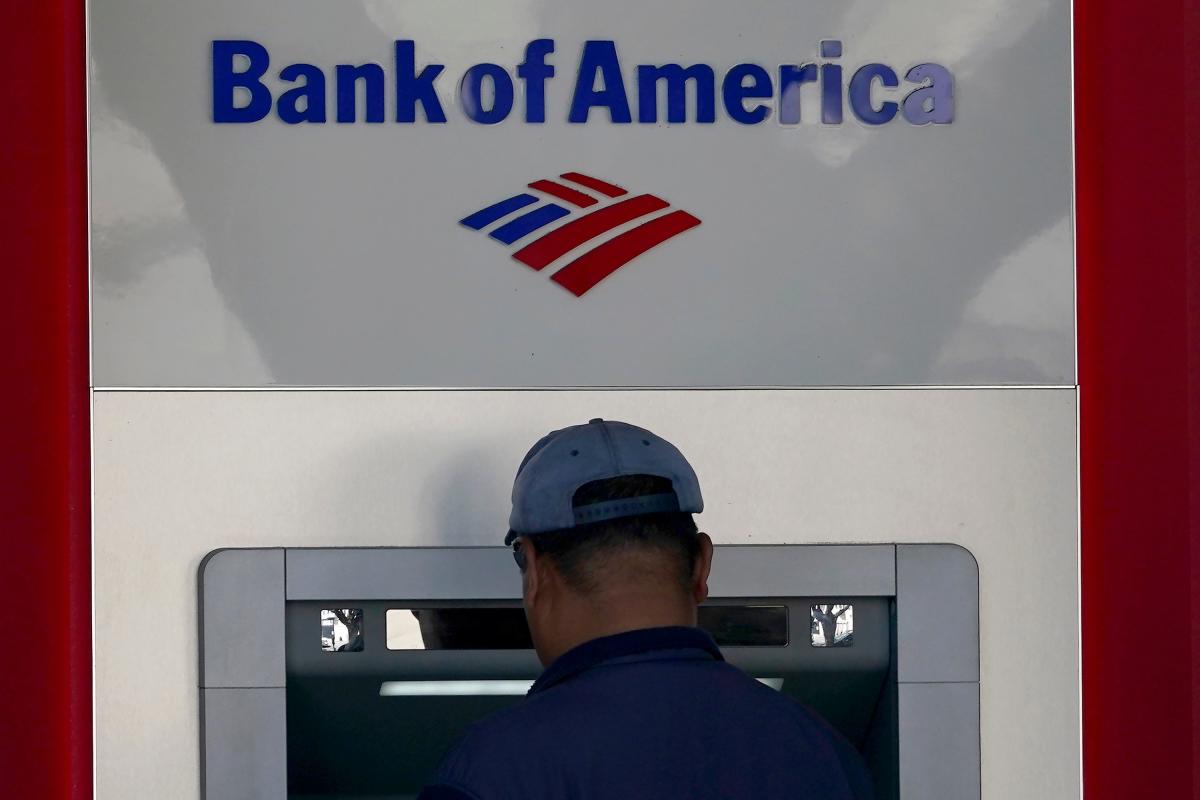
Big banks, such as Capital One, Bank of America and Citibank, “don’t compete on rates,” Rossman said. “They compete on national advertising campaigns. They put their names on stadiums.”
In a 2023 survey of 3,674 adults, Bankrate found that only one saver in five earned an interest rate of 3% or higher, he said. “And 3% is a pretty low bar.”
Savers can do better, he said. The current market offers several ways for people to park their money and earn 4% or even 5% interest. That’s an additional $400 or $500 a year on a $10,000 deposit.
Some options leave investors free to withdraw the funds at whim, just like an ordinary checking account. Others require leaving the funds untouched for a few months or a year.
“We’re talking the best savings rates we’ve seen in a long time,” Rossman said. “A lot of people could be doing a lot better.”
Older Americans remember when banks competed for their savings, offering premiums, perks and serious interest. Rates on ordinary savings accounts reached 8% in the Reagan ‘80s when the prime rate soared into double digits.
Since the Great Recession, by contrast, savings accounts have yielded less than 1% a year, on average. Those rates mirrored the Federal Funds rate, which was effectively zero for many of the past 15 years.
Fallout from SVB banking crisis: Banks may be hiking savings rates to hold on to customers
That fact may partly explain why many people don’t save much in banks. The median American family held only $5,300 in checking, savings and money market savings in 2019, according to the most recent data from the federal Survey of Consumer Finances.
Here, then, is the good news: Higher interest rates are only a few clicks away.
Look into the best high-yield savings accounts
A quick online search yields dozens of offers for bank savings accounts that pay annual interest in the 4% to 5% range. Motley Fool Ascent and WalletHub, among others, offer regular roundups.
Many offers come from banks that aren’t quite household names: UFB. Valley Direct. Bask.
“Most people haven’t heard of these,” Rossman said. “But that’s okay, because they’re all FDIC insured.”
The feds cover up to $250,000 per depositor, per bank. As long as the offering bank has FDIC backing, experts say, it should be a safe home for your money.
Many high-yield accounts sit in banks that are online-only. There’s no way to drive to a branch and meet with a teller.
If you’re change-averse, consider keeping that checking account you’ve had for 17 years and opening a new high-yield savings account.
“You can open one of these accounts, seriously, in just a few minutes online,” Rossman said.
Other options abound.
Money market accounts
One is the money market account. They are offered by banks and credit unions with the backing of the FDIC or National Credit Union Administration. They generally aren’t as flexible as savings accounts: You may not be able to move money in and out quite so easily.
Money market accounts were moribund through the low-interest years, but not today. Competitive rates reach the 4% to 5% range.
“They’re kind of a step above a savings account,” said Ed Snyder, a financial adviser in Carmel, Indiana. “Still very liquid,” meaning that funds can easily be converted to cash.
Check out the best CD rates
Savers who don’t expect to withdraw their money in the near future might consider certificates of deposit. Banks offer CDs at comparatively attractive rates, with FDIC backing. In return, the depositor agrees to leave the money in the bank for a set time: a few months, a year, or 10.
In the past, banks generally rewarded customers with higher rates for CDs with longer terms. In 2023, however, rates favor the shorter-term investor. Short-term rates are high because investors expect rates to fall over the long term.
What makes all of these options so appealing, experts say, is that they carry almost no risk.
“Don’t worry about the labels,” Papadimitriou said. “Whether it’s called a CD, a checking account, a savings account, or a money market account, put your money where you can get the highest interest rate.”
This article originally appeared on USA TODAY: A high-interest savings account is not out of reach: What to know
Read the full article here