

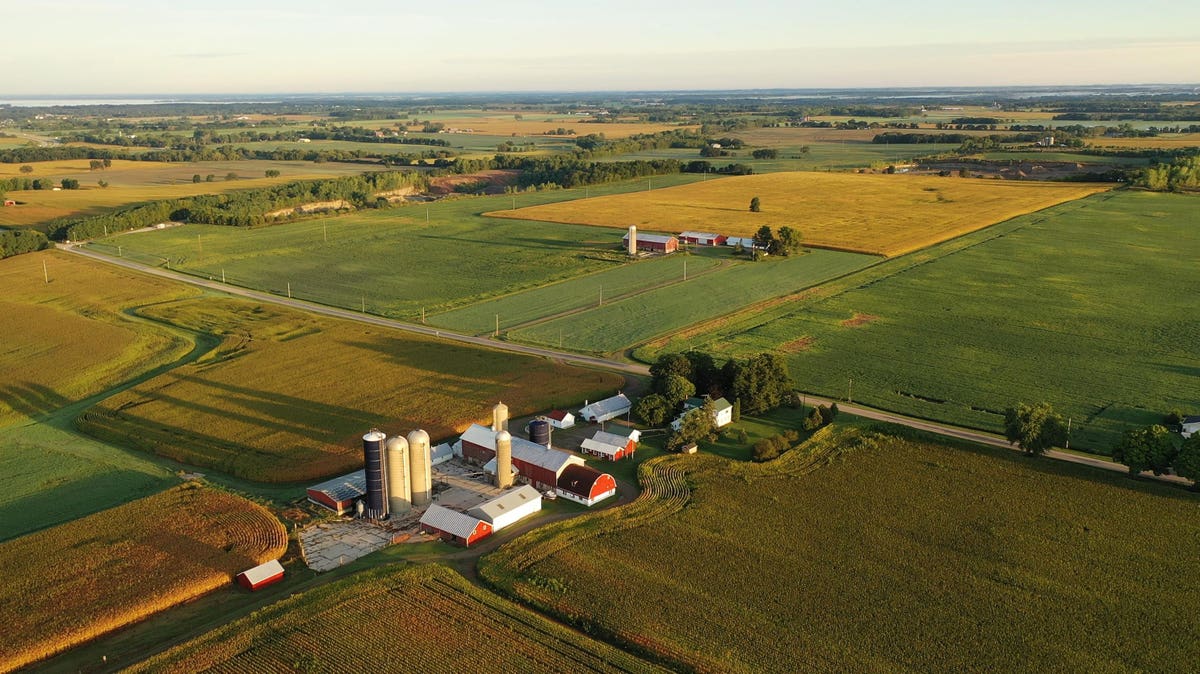
There are not very many Americans still doing the farming that feeds our citizens and many others around the world. The legacy of the Homestead Act of 1862 persists in that many of those farmers still own land from those 160 acre grants that have been passed down for generations, but particularly for the “broad acre crop” regions it takes a much larger farm to be economically viable. Farms have grown significantly through purchases from neighbors whose families got out of the farming business, but it is risky to over-extend on land mortgages because of the economic uncertainties that comewith a business that is highly impacted by weather and in which the farmer is a “price taker” without leverage in commodity markets. The industry learned that lesson in the Farm Crisis of the 1980s. Expansion through land rental is the logical solution and that is why a significant share of cropland in the US is under lease (see graph below)
One could modify the line about love from the award-winning Broadway musical and Movie, Rent to say, “you probably shouldn’t ‘buy the farm,’ but you can rent it.”
However, there are some downsides to the land-lease model for agriculture. There are certain farming methods which lead to improvements in “soil health” over time, and that leads to several desirable outcomes, the first being greater yield potential and yield stability – particularly under the stress-causing weather conditions which are becoming more common due to climate change. Those same practices can lead to net “carbon sequestration” in the soil – something that can significantly help to mitigate overall climate change.
The problem is that if a farmer improves the soil health of a rented field and raises its yield potential, they may not get the benefit. Typical leases are on an annual cash basis so the responsible farmer can end up being out-bid for the field or have to pay more to keep the lease. Also, rented land isn’t a good fit for something like a carbon offset market because that requires “permanence” in terms of “climate-smart” farming methods and a renter can’t really make that commitment.
The Agricultural Land Market
Farmers aren’t the only people interested in owning agricultural land. This class of real estate can be a stable asset with significant potential for appreciation. In an age of Climate Change, the value of land should logically also reflect its “climate resilience,” which is a function of the historic attention to the soil health of that land.
There is an investment company called Fractal Agriculture, which is built on the concept of bringing together progressive farmers and responsible investors in a win/win/win arrangement with the third beneficiary being the environment. What Fractal offers farmers is the ability to sell a minority share of their existing land to outside investors so that they continue to have full control over their own farm operation but can now purchase additional land and reap any increased land value achieved by farming it in a way that enhances soil health and climate resilience. The outside investors are also able to take a minority share in the new properties thus magnifying the land improvement potential with less financial exposure for the farmer.
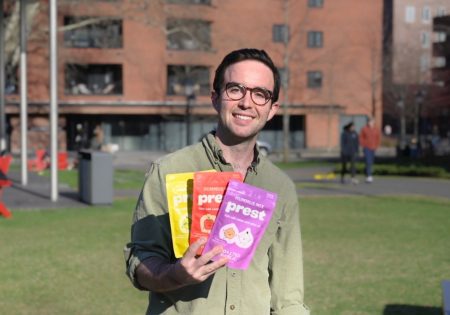
Fractal was started by Ben Gordon who came from a North Dakota farming background, is a military veteran, and who spent several years each in the agricultural technology and investment sectors. Thus he has ties to, and an appreciation for, both the farming and investment communities. Fractal is also a technology-focused company that is able to use publicly available data (e.g., from satellite imagery) to analyze the farming history of land on a field-by-field basis and thus complete the underwriting of the property purchase. That perspective can be combined with a farmer/partner’s local experience as a way to identify the parcels with the greatest potential to benefit from the value-creation scenario of becoming partially owned and fully controlled by the experienced farmer.
The investor does not really have to have a sophisticated agricultural knowledge-base, nor does this arrangement rely on purely altruistic motives. The investor is getting a financially sound asset, and the farmer has increased his/her fully controlled land base with less financial risk. One unique piece of the Fractal financial model is that they will lower farmers’ cost of capital (i.e., the annual premiums, or rent) if they implement any number of soil health practices over the course of the investment. The underlying belief is that building soil health supports more stable and resilient yields, which in turn lowers the risk profile for investors. There may be potential for additional farm income through carbon credits or a carbon intensity program.
Fractal was formed in June of 2022 and has been cultivating ties with investors, processive farmers and sustainable agriculture experts. They are now in the launch phase with a number of active purchases in process. Fractal’s aspiration is to be the largest farmland investor in North America by 2030 keeping 1,000 farmers on their land.
Read the full article here