


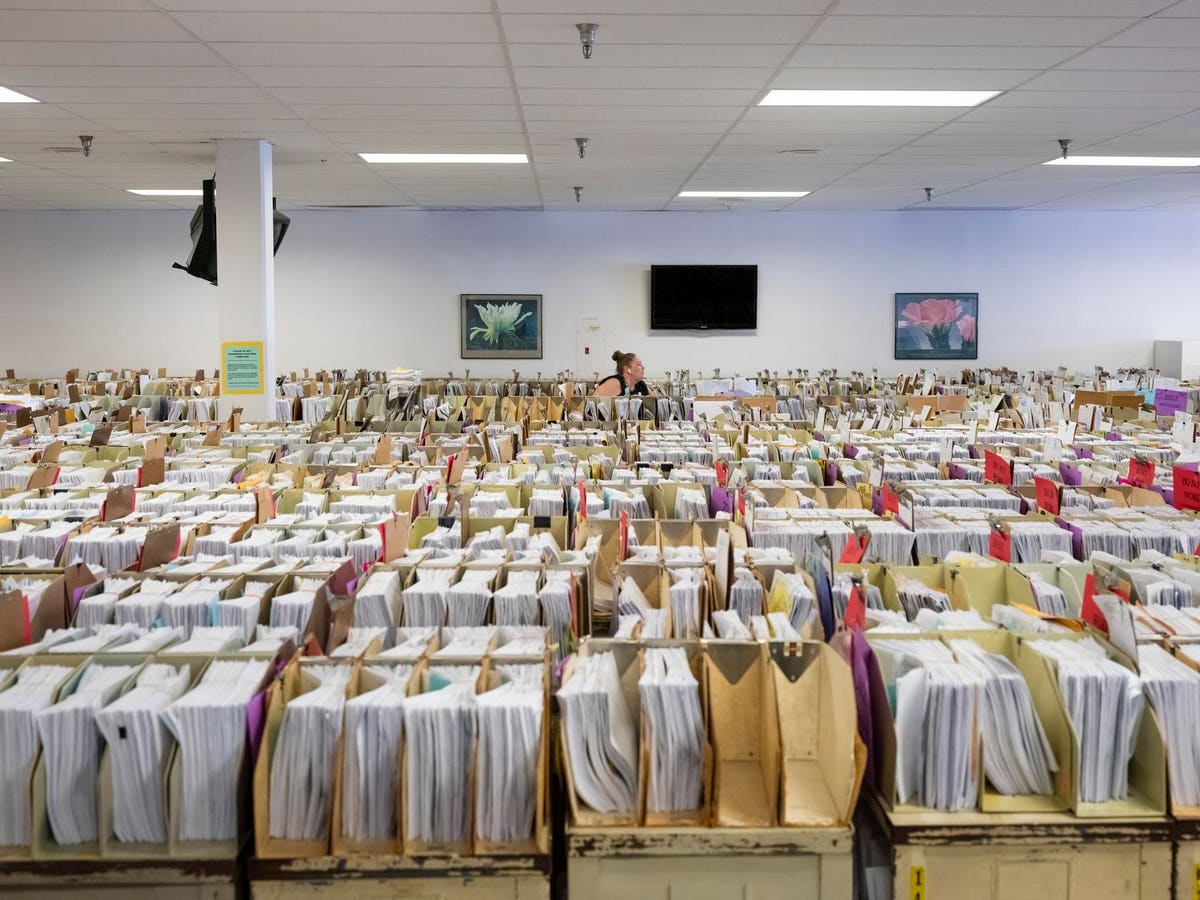
During the pandemic, taxpayers saw photos from the IRS cafeteria in Austin, Texas, showing racks and racks of paper filling a room not generally used for storage. It was a glimpse of the tens of millions of pieces of paper that require manual processing at the IRS. But, IRS Commissioner Danny Werfel said, “It’s time to ensure that no cafeteria in the IRS ever looks like that again.”
Paperless Processing Initiative
Treasury Secretary Janet Yellen and Werfel announced plans to do just that as part of its “paperless processing initiative.” The initiative is building on progress that has already begun, thanks to funding from the Inflation Reduction Act.
Noting that it’s an “ambitious plan,” Werfel announced that, in filing season 2024, taxpayers will be able to go paperless—if they want. Last year, nearly 213.4 million returns and other forms were filed electronically, representing 81.2% of all filings. When it comes to individual tax returns, a whopping 93.8% were filed electronically.
In addition to encouraging more electronic filings, by filing season 2025, the IRS will digitize all paper-filed returns when received, meaning that all paper will be converted into digital form as soon as it arrives. Currently, IRS employees manually enter numbers from paper returns into computers one digit at a time, creating significant delays for taxpayers and challenges for IRS staff.
Werfel says Scanning “is a game-changer for taxpayers and our tax administration.” Scanning results in significantly shorter processing times for returns. This means faster refunds for paper returns—and issues with returns can be resolved much faster.
Of course, some scanning has been happening at the IRS for more than 35 years. But, Werfel says, “it’s been piecemeal.”
Switching to a more comprehensive scanning strategy is a daunting task. The agency receives about 76 million paper tax returns and forms, and 125 million pieces of correspondence, notice responses, and non-tax forms annually. The IRS also has more than 1 billion historical documents, which costs $40 million per year to store. That paper, says Werfel, is the agency’s kryptonite.
So what is the agency doing to cut loose from the paper and become a digital IRS?
2024
The IRS hopes taxpayers can digitally submit all correspondence, non-tax forms, and responses to notices in 2024. As a result, the IRS estimates more than 94% of individual taxpayers will need to send paper mail to the IRS. Achieving this milestone, says the IRS, will enable up to 125 million paper documents to be submitted digitally per year. This will not be required—taxpayers who want to send in paper returns and correspondence can still do that.
Taxpayers will be able to e-file 20 additional tax forms. Achieving this milestone will enable up to four million other tax documents to be filed digitally every year. This includes amendments to Forms 940, 941, 941-SS, and 941 (PR).
And, the IRS says, at least 20 of the most used non-tax forms will be available in digital, mobile-friendly formats that make them easy for taxpayers to complete and submit. These forms will include a Request for Taxpayer Advocate Service Assistance, making it easier for taxpayers to get the help they need.
2025
By 25, the IRS hopes to have an additional 150 of the most used non-tax forms available in digital, mobile-friendly formats. Estimates suggest that 15% of Americans rely solely on mobile phones for Internet access—according to the IRS, making forms mobile-friendly is critical to serving these taxpayers.
Also, in 2025, the IRS intends to process all paper-filed tax and information returns digitally, and half of paper-submitted correspondence, non-tax forms, and notice responses will be processed digitally. Additionally, up to 1 billion historical documents will be digitized, saving IRS approximately $40 million in annual storage costs.
2026
According to the IRS, all paper documents—correspondence, non-tax forms, and notice responses—will be processed digitally by filing season 2026.
Moving Forward
Werfel stresses that the scanning process that the IRS has developed “is completely safe and secure.” Each scanned 1040 is saved into a zip file with a digital copy of each submitted document. The plan is to continue monitoring and evaluating those processes to ensure that it remains secure.
So far this year, the IRS has scanned more than 700,000 paper forms.
“The bottom line,” Werfel says, “is an IRS after the Inflation Reduction Act is a very different IRS than before. This is good for taxpayers and good for the nation.”
Read the full article here