



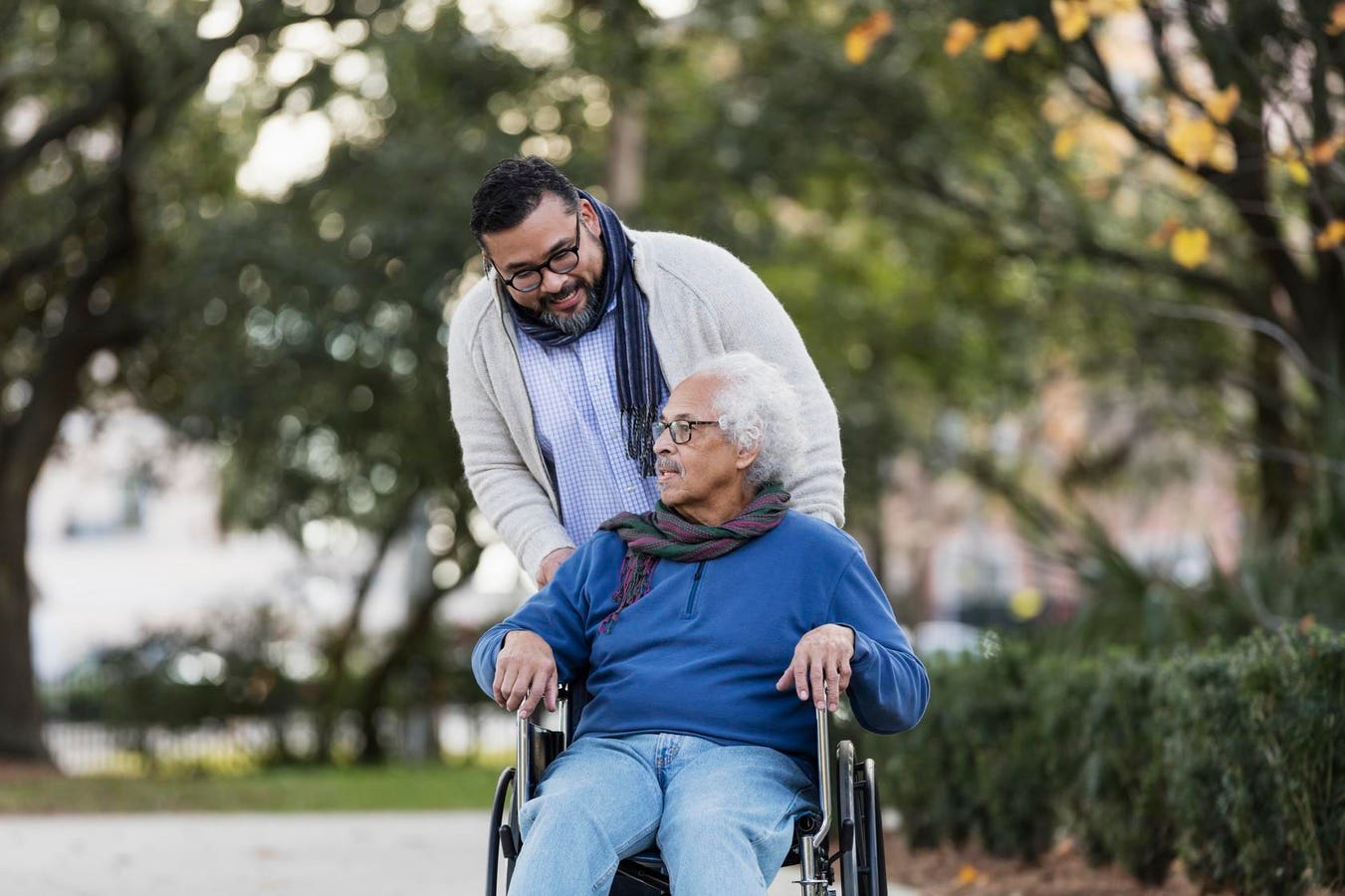
I and others have written endlessly about the importance of supporting family caregivers. They are the backbone of the system of care that supports frail older adults and younger people with disabilities. But they get little support from the health care system. Often, their assistance is vastly more important than costly medical treatment.
But many family members provide this care with little or no training, no guidance about services that are available to help, and no emotional support. Thus, they deliver care with much love and little skill. Now, two national non-profits have suggested ways to fix this.
Too often, the lack of sufficient support for family caregivers results in avoidable emergency department visits, hospitalizations, and nursing home stays for care recipients, as well as severe stress and declining health for caregivers themselves. To say nothing of the additional medical costs they create.
Paying To Recognize Family Caregiving
Health systems and the health policy world have slowly begun to recognize the problem. But government and health care providers have failed to create meaningful solutions.
Without being paid, it is not realistic to expect physicians, hospitals, or health systems to provide direct supports or even information to families. And even if they are compensated, many physicians simply don’t have the knowledge to be useful to family caregivers.
In recent years, government has at least acknowledged the role that family caregivers play and their need for support. But recognition is one thing. Real assistance is another. And that often has been a matter of two steps forward and one step back.
For example, in 2017 Congress passed the RAISE Family Caregivers Act that requires government to create a national caregiver strategy and recognizes the need for federal agencies to partner with one another to assist these family members. The effort made some modest progress. But the Trump Administration has effectively stalled the initiative by firing many of the staff assigned to manage the program and ending most inter-agency cooperation.
New Recommendations
Now, a new report by two non-profits, the Coalition to Transform Advanced Care (C-TAC) and the National Alliance for Caregiving (NAC) has made several practical recommendations for ways to encourage docs and hospitals to better support family caregivers. Most of their proposals could be adopted by the Centers for Medicare and Medicaid Services (CMS) without new legislation.
Many would enhance payment models to compensate Medicare providers for any time they spend providing information or direct supports. These reforms would apply both to fee-for service traditional Medicare and Medicare Advantage managed care.
Many of the suggestions involve money: If government (and private insurance for that matter) wants doctors and hospitals to do something, it needs to pay for it, at the very least.
The CTAC and NAC report acknowledges this reality and wisely would build on existing payment models rather than trying to create new ones.
Traditional Medicare
For example, for traditional fee for service Medicare, the groups urge broader expansion of billing codes to allow providers to charge for time spent training family caregivers. They also would have docs increase their use of caregiver risk assessments and include caregiver needs in their patient’s health care documentation.
Patients receiving certain specialty care under Medicare, such as cancer or kidney care or certain surgeries, would be provided care planning services that include caregiver training and financial assistance for care coordination.
These supports also would be integrated in the Administration’s Transforming Episode Accountability Model (TEAM) demonstration model. The overall model requires selected hospitals to coordinate patient care for 30 days following discharge after certain surgeries. They include hip and knee replacements, hip fractures, spinal fusions, and some heart and bowel surgeries.
For Medicare Accountable Care Organizations, where Medicare pays a fixed fee for providing total care for a medical episode (such as an illness or surgery), the groups recommend allowing ACOs to use their global budgets to support caregivers with services such as transportation or food. They’d also include caregiver training and needs assessments, and be measured in part on whether they included in family members in care planning.
Medicare Advantage
Medicare Advantage would make important changes to the supplemental benefits they offer. These currently include vision and hearing care, gym memberships, and some limited home care benefits for people with chronic disease.
The new report suggests CMS “encourage or require” plans to offer supplemental benefits that directly support family caregivers of enrollees with serious illness, dementia, or functional impairment. These could include respite care, caregiver training, and the like. They also suggest patients be given access to care managers or coaches.
Importantly, the report also recommends CMS collect better data on supplemental benefits to determine which benefit patients and families and which do not. This has been a critical gap for years.
C-TAC and NAC have come up with practical but important initiatives aimed at better preparing family members for the rigors of caregiving. They are relatively modest but have the potential to improve the lives of family caregivers and those they care for.
Read the full article here