


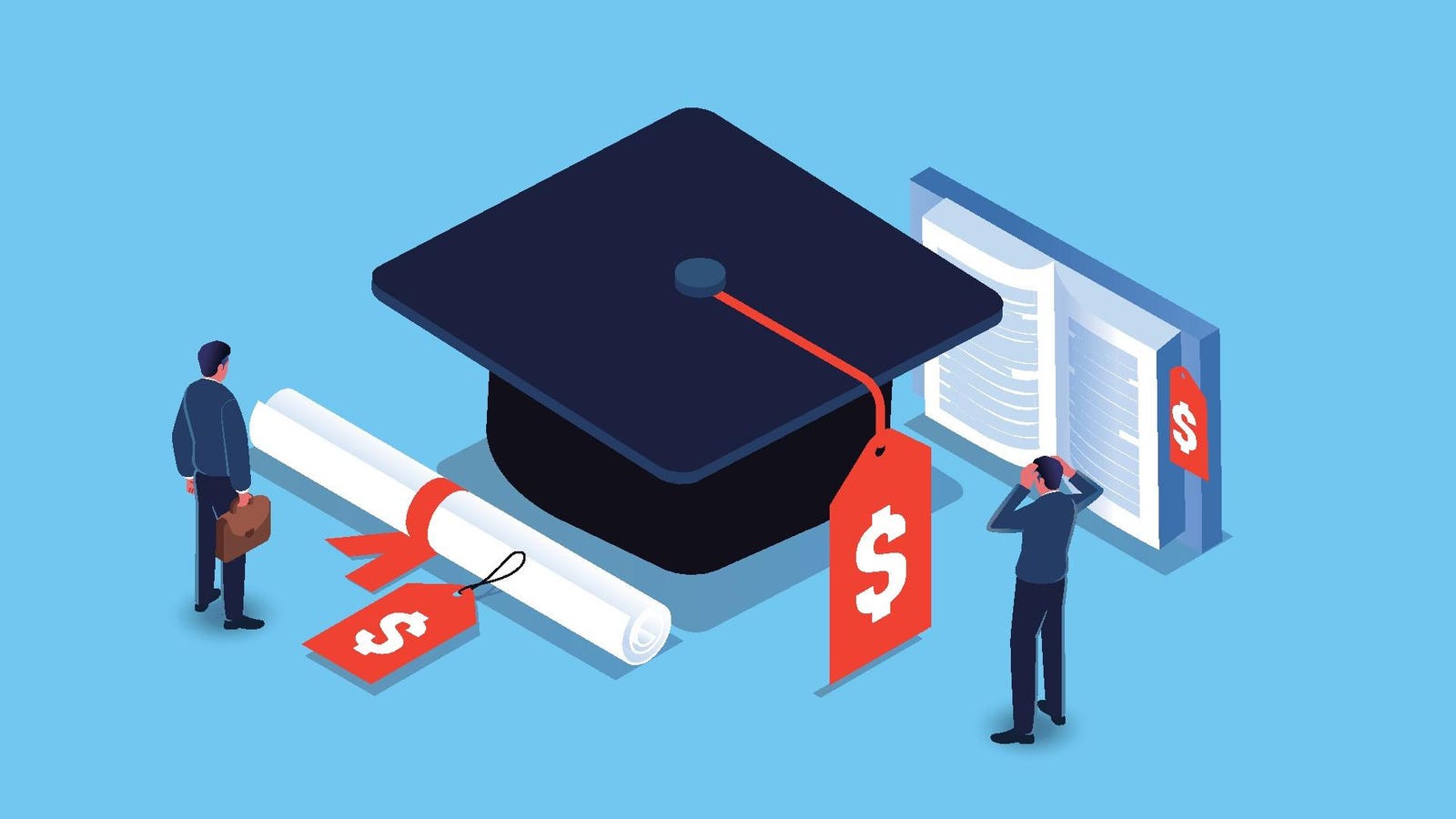
With Americans again struggling to repay $1.6 trillion in student debt (second only to mortgage debt), high school seniors (and their parents) are becoming increasingly price sensitive in their college search. For private colleges that have long relied on a combination of high sticker prices, offset by big financial aid packages, this could be a problem.
In a new survey of current high school seniors registered on the Niche.com college search and review site, 89% said a school’s published price would affect the likelihood they’ll apply or inquire about that school, up from 76% of last year’s seniors who said this. (While the survey is a self-selected sample, it’s a large one, with 24,000 teens completing the survey this year.)
Even more dramatic: 59% of the 89% who described themselves as price sensitive—in other words, 53% of all seniors—said they flat out wouldn’t consider a school that costs more than $40,000 per year in total. Private colleges, on average, charged $41,540 in tuition alone for the 2023-24 academic year, up 4% from the year before, per the latest numbers from the College Board. Concern about prices goes along with growing doubts among Niche users that they’ll be able to pay for college—fewer than a quarter now say they’re confident they can afford college.
Very, very few students pay the listed tuition price at the private college they attend. Instead, the colleges offer students financial aid packages that steeply discount the tuition through merit- and need-based institutional grants. As tuition rises, so does financial aid; during the 2022-23 academic year, students paid an average of only 49% of a college’s published price, according to numbers from the National Association of College and University Business Officers.
But the list price is posted on the college’s website and that figure can scare off prospective students who don’t know how private colleges’ opaque pricing structure works. “List price matters, particularly for students attending under-resourced [high] schools where college advising can be hit or miss,” says Bob Massa, principal and cofounder of Enrollment Intelligence Now, a college consulting firm. Forty-eight percent of Niche survey respondents said they preferred to get information from their school or college counselor, and this was even more true for traditionally underserved students. If their high school counselor doesn’t know (or doesn’t have time to explain) average net price, the student could remain in the dark.
Private college officials are quick to brush aside the sticker price and steer students instead to the institutions’ net price calculators, which allows prospective applicants to get an estimate of their actual out-of-pocket costs. Colleges whose students receive federal financial aid are required to offer such calculators. But the sticker price is what pops up in a quick Google search, and a student’s estimated net price is hidden behind a form that requires students to input information they might not even know, including their parents’ salaries, cash in their bank accounts and sometimes even their mortgage and 401(k) balances. Some tools also ask for a student’s grade point average and standardized test scores to factor in possible merit scholarships.
“Colleges tend to shy away from promoting net price, because the average grant or scholarship is just that—an average. An individual could receive more or less than that amount—there is no hard and fast number for the price a specific individual will pay,” Massa says. “It takes time to explain net price to students and parents—time that schools simply do not have,” if prospective students will not even investigate an expensive college. He recommends that colleges push the net price calculator in all of their marketing to prospective students. “A ‘You can afford X University’ campaign based on net price paid by different groups of students would help land applications from those who are scared away by the list price,” he adds.
A handful of private colleges have executed tuition resets through which they publicly slash their sticker price (and quietly lower their financial aid packages to match) in order to draw in students that might have otherwise ruled them out as too expensive. For example, Bridgewater College, a liberal arts school in Virginia with about 1,400 undergraduates, cut its tuition by 62% in August, from $40,300 to $15,000.
“The original purpose of tuition discounting was to make higher education affordable to low-income students,” Bridgewater president David W. Bushman said in a press release explaining the dramatic shift. “But over time, the practice has resulted in higher and higher tuition sticker prices that bear little resemblance to the actual cost of education. We’re now discouraging the many students and families whom the system was designed to attract. Worse yet, at a national level, we’re undermining the notion that a college education is worth the price.”
Wartburg College in Waverly, Iowa also reset its tuition price in August, from $48,490 to $25,000. Colby-Sawyer College in New Hampshire, Fairleigh Dickinson University in New Jersey (ranked #461 on Forbes’ Top Colleges list), and Washington & Jefferson College in Pennsylvania (ranked #351) are among the many colleges that have tried to slash their prices to draw in wary students. For colleges that recruit most of their students regionally and that do not have national name recognition, tuition resets do lead to an increase in applications over five years, according to research from Kennedy & Company, a higher education consulting firm, that examined the outcomes of tuition resets at 72 colleges between 2012 and 2019.
That said, resets don’t make sense for every college. A school is unlikely to significantly cut their tuition if they enroll a significant number of students who pay full price, Massa says. “Especially if universities have more than a handful of ‘full payers’ who receive no institutional financial aid support, a lowering of tuition will have a significantly negative impact on net revenue,” he adds. That’s why you likely won’t see colleges with swelling applicant pools and strong name recognition—think the Ivy League schools, Amherst College, Stanford University, the University of Southern California—slashing their list prices anytime soon.
Moreover, many students and parents, particularly from affluent families, are still susceptible to “prestige pricing,”—a marketing idea that if a product, service or college costs more, it must be of a higher quality or reputation. Four in ten students say that a college’s brand or name recognition matters to their decision making, according to the Niche survey. Affluent students were even more likely to say this. “I believe that a good brand name is imperative to getting a high-quality job,” one survey respondent offered.
The model of a high price, combined with steep discounts, has been dominant at private colleges for decades. It’s unclear how many schools might follow the handful which have abandoned that model.
Read the full article here