



Entrepreneur
Key Takeaways
- The right workspace doesn’t just house your team — it shapes how they perform.
- As startups grow, thoughtful space design becomes a powerful management tool.
For many founders, the first version of their company lives on laptops and kitchen tables. Slack, Zoom and the occasional coffee-shop meeting keep it alive. That model is flexible and inexpensive — and for a while, entirely sufficient.
But as a startup grows, space stops being about rent and starts being about performance.
I’ve worked with hundreds of founders navigating this transition. The pattern is consistent: teams outgrow improvisation faster than they expect. Meetings become harder to run. New hires struggle to onboard. Momentum becomes harder to sustain.
At that point, the workplace becomes a management tool, whether founders intend it to or not.
Over the past few years, we’ve had the opportunity to rethink how physical space supports high-growth technology companies, especially those developing software and AI products. That work forced us to confront how much the nature of work has changed and how poorly most “traditional” startup offices support the way early teams actually operate today. The result has been a clearer view of what space does well, and what it often gets wrong.
Here are five lessons founders should consider when creating their first real workplace.
1. Hybrid work has changed the floor plan
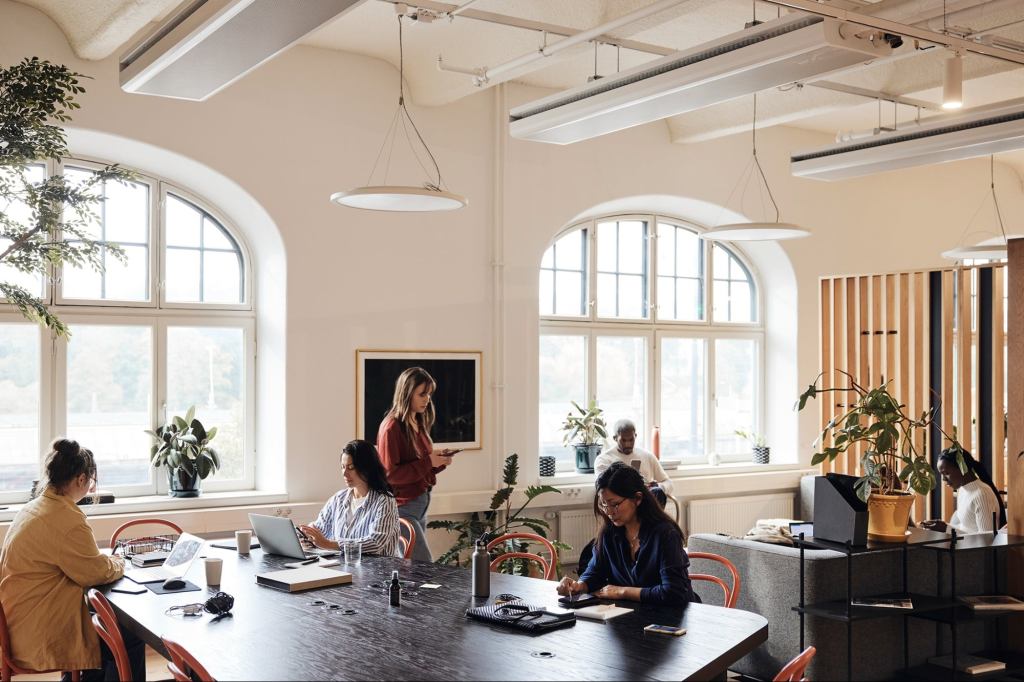
Startup teams use offices differently than they did five years ago. The full team isn’t likely to be in the office every day, and much of the routine work happens virtually. What draws people into a shared space now is collaboration, decision-making and moments that benefit from being together.
That means fewer private offices and more flexible collaboration rooms. Teams need conference space that actually works for hybrid meetings; small rooms for heads-down work and calls, and shared areas designed for quick problem-solving sessions.
The goal isn’t to force presence — it’s to make the office worth coming to. The founders who get this right design space around how their teams work today, not how offices used to function.
2. Feel matters as much as function
Founders often focus on square footage and ignore how a space feels. That’s a mistake. Teams will avoid a workplace that feels sterile, uncomfortable or disconnected from daily life — even if it’s technically functional.
Today’s talent expects natural light, walkable surroundings and spaces that feel human. Amenities don’t need to be flashy, but they do need to be reliable: clean facilities, reasonable temperatures, basic kitchen access and comfortable places to work and meet. People are comparing the office experience to working from home. If the space feels less comfortable than home, it will be a struggle to become part of the company’s rhythm.
Good space design supports focus and energy. Bad space quietly erodes both.
3. Dependable technology and invisible infrastructure are non-negotiable
When technology fails, people stop using the space. High-speed internet and frictionless audio-visual systems aren’t “nice to have.” They are foundational.
If founders want teams to gather for planning, customer meetings and real-time collaboration, the infrastructure must work every time. The more invisible the infrastructure feels, the more likely the space is to become part of daily operations. When basic tools fail, the office becomes a liability instead of an asset.
This is one of the most common failure points I see. Teams invest in the finishes of a space and underinvest in the systems that actually support work.
4. Proximity still matters
Hybrid work expanded the talent pool, but it didn’t eliminate the value of proximity. Founders still benefit from being near other founders, potential hires, investors and institutional partners. Feedback loops shorten when access is easy. Learning accelerates when founders see how others solve similar problems.
Co-locating with other early-stage teams creates a kind of ambient learning. Questions get answered faster. Intros happen organically. Shared space can create the kind of professional collisions that are hard to replicate on Slack. This doesn’t require glossy trappings. It requires intentional proximity to people who are building, funding and advising companies like yours.
5. Cost and flexibility are strategic decisions
Company founders absolutely must be extremely judicious when spending investor dollars on space and amenities, especially before the business breaks even or becomes profitable.
Future-proofing doesn’t mean overbuilding for scenarios that might never happen. It means being honest about what your business plan will require in the next 12 to 24 months and negotiating flexibility into your space decisions. Modular layouts, reconfigurable rooms and the ability to expand incrementally all buy founders time and options. That flexibility is often worth more than aesthetic upgrades.
Even a well-designed space becomes a liability if it can’t evolve. Headcount changes. Product strategies pivot. Teams grow, contract and reorganize. Rigid leases and fixed layouts slow decision-making and add friction at moments when speed matters most.
Your first workplace is a strategic asset
Across the country, communities are investing in innovation spaces because founders consistently struggle to find environments that support how modern tech teams actually work. I’ve seen firsthand that purpose-built spaces — designed around collaboration, hybrid work and founder community — change how quickly teams learn and execute. The physical environment shapes behavior, whether founders acknowledge it or not.
Unlike large companies, startups can design work in a way that fits their teams from day one. Space can reinforce culture, accelerate onboarding and support faster decision-making. Or it can quietly slow everything down.
These five lessons won’t eliminate every misstep, but they can help founders avoid the most common ones. The first real workplace a startup chooses sets patterns that compound over time. Treating that decision as strategic — not cosmetic — gives young companies an advantage when they need it most.
Key Takeaways
- The right workspace doesn’t just house your team — it shapes how they perform.
- As startups grow, thoughtful space design becomes a powerful management tool.
For many founders, the first version of their company lives on laptops and kitchen tables. Slack, Zoom and the occasional coffee-shop meeting keep it alive. That model is flexible and inexpensive — and for a while, entirely sufficient.
But as a startup grows, space stops being about rent and starts being about performance.
I’ve worked with hundreds of founders navigating this transition. The pattern is consistent: teams outgrow improvisation faster than they expect. Meetings become harder to run. New hires struggle to onboard. Momentum becomes harder to sustain.
Read the full article here