


Entrepreneur
Before the pandemic, one of the most pressing questions about work was whether working from home was feasible. Now, with the crisis having accelerated the adoption of newer technologies by up to seven years, the question for most businesses is not whether working from home is possible but whether working from home or going into the office is better.
Employers have many points to consider in this decision, such as their budget, the nature of the work, and the number of employees. But the most important factor that weighs into the equation is trust.
Related: 3 Ways to Build Trust Among Employees
Workers are adults, so treat them as such
Consider a parent and their child. If the parent didn’t trust their child, they might not send the child to school or let them explore the world. Instead, they would micromanage and tell the child what to do about everything.
Good parents want to build a trusting relationship that matures to a level where, even though the parent and child eventually might not be together, the parent knows the child is doing well and has learned enough to be successful on their own.
The employer-employee relationship is much the same. Employees are already at their own level of success. They have learned enough that they do not need the employer to micromanage everything for them. So, why would an employer want to make the employee dependent on the employer to make the work-from-home decision? The employees are capable of making that decision for themselves. The simple answer is trust. They need employers to trust them if they are going to keep growing and doing their best work.
Underneath this point, there is a difference between micromanaging and mentoring. Micromanaging means that the person in authority forces someone to act or think a certain way and gives them no choice. But with mentoring, directives and boundaries are respectfully done. The person being mentored has clear guidance, but they are free to make their own decisions and learn from their wins and losses. A mentoring employer would clearly explain to workers the pros and cons of each setup and trust that workers will make the decision that gets good outcomes for both the workers and the employer.
Related: 10 Tips to Unlock Better Collaboration and Creativity for Remote Workers
Finding the truth about what’s happening
Employers have many legitimate reasons why they might want to bring workers back to the office. People need emotional and physical contact — workers might genuinely miss each other. There might be some gap in digital communication that cannot be felt until people see each other — perhaps they are missing the water cooler effect.
Many employers have said their plan to bring employees back into the office is due to productivity. But even looking at productivity can be misleading. An employer might be convinced that the organization is not getting as much return as it would if workers were in the office. They might think that, by bringing people back to the office, they can train, supervise, and make those people better employees.
But it could be that some of the workers the employer is measuring may not have been that productive initially. It’s just that having the workers work from home forced the employer to do a formal measurement of productivity, which made the lack of productivity from those workers more obvious. Employers need to examine their situations holistically and be open-minded to alternative explanations for what they see to ensure their assessment of what is going on is accurate.
Related: We Know Return to Office Mandates Backfire — So Why Are Tech Giants Like Amazon, IBM and Zoom Reinstating This Outdated Policy?
Challenge, connect and collaborate
Even though the senior-most person might not have enough experience to make a decision, they often do make the decision because it is expected. With work-from-home, this might mean that an executive who has never handled a work-from-home setup decides workers should return to the office only because many companies are doing it.
But in an open-minded organization, other people are allowed to brainstorm with the senior-most person. They will examine and challenge the executive’s decision, not to denigrate but to improve the outcome. Collaborative brainstorming allows leaders at all levels to properly articulate who should consider coming into the office, when, why, and so on, rather than simply handing down the decision.
To grasp why this is so important, think of an employee who loves their job but has moved two hours away because the employer said they were okay with a work-from-home setup. If a leader then says the employee has to come back to the office, that employee might be scared they are going to lose their job. They might say to themselves, “I don’t want to sell my house. I don’t want to uproot my family and move.”
So employers need to understand that people are not all the same. Workers all have different attitudes, aptitudes, experiences and education. They each thrive in their own environment, and if an employer puts them out of their environment, they become like whales stranded on an island — they don’t fit. If employers and employees take the time to get to know each other online and offline, they will understand these differences better, making the work-from-home decision easier and improving buy-in.
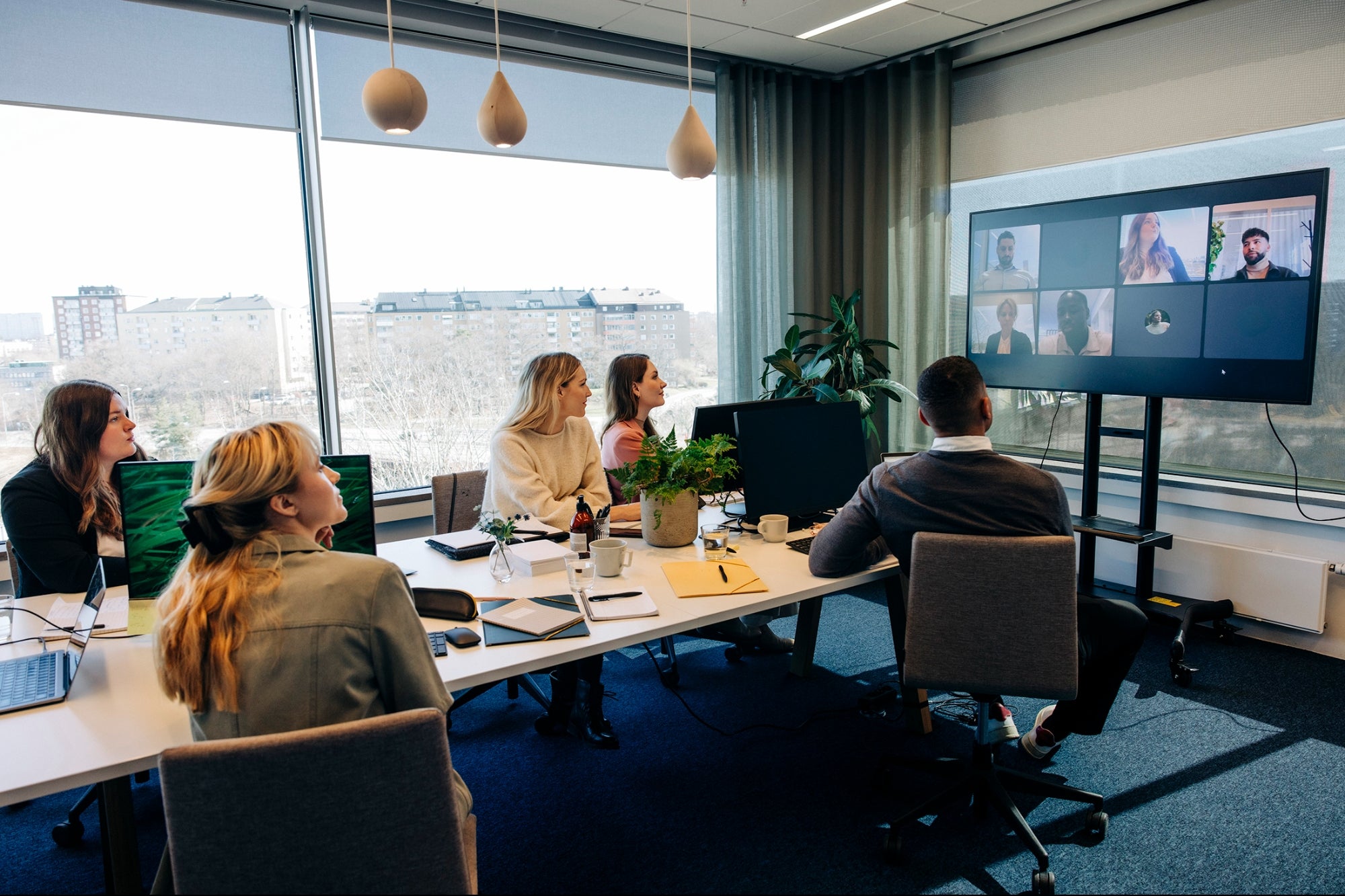
Because employees must get to know each other, employers must figure out the best way to encourage people to meet, bond, and collaborate during work hours. There are many tools to unite employees, and what works for one organization might not work for another. Workers might try having an online pizza party where the team members might not be physically present but are all participating in their homes on video. Workers need to have opportunities to train in a way that matches their rhythm to the rhythm of the other employees.
Related: The Most Common Work From Home Problems — And How to Solve Them.
All for one and one for all
Every organization has its own resources, goals and cultural expectations. So workers and leaders must approach the work-from-home decision objectively and think about what’s best for their own business. However, employers should not force the decision authoritatively on their workforce. Instead, they should make people part of the decision-making process so that, regardless of whether workers stay home or come back to the office, it’s clear that there is reciprocal trust serving as a foundation for the choice. The more people are willing to learn about each other, the more natural this collaboration will feel, and the more positive the results will be. My 2 cents: to make this happen, a certain number of leaders need to be together, like an office, to bring strategies that benefit all stakeholders to reality.
Read the full article here