



This is commentary by Allan Sloan, an independent business journalist and seven-time winner of the Loeb Award, business journalism’s highest honor.
Now that the Federal Reserve’s 18 months of rate increases may finally be nearing an end, this is a good time to take a look at some of the biggest winners created by the Fed’s interest-raising moves. And while we’re at it, let’s have some fun with numbers by revisiting some of the biggest losers.
The winners, of course, are people who own money-market mutual funds, whose current income is running more than 30,000%—or 300 times—above what it was in February 2022, the month before the Fed began raising short-term interest rates to combat inflation.
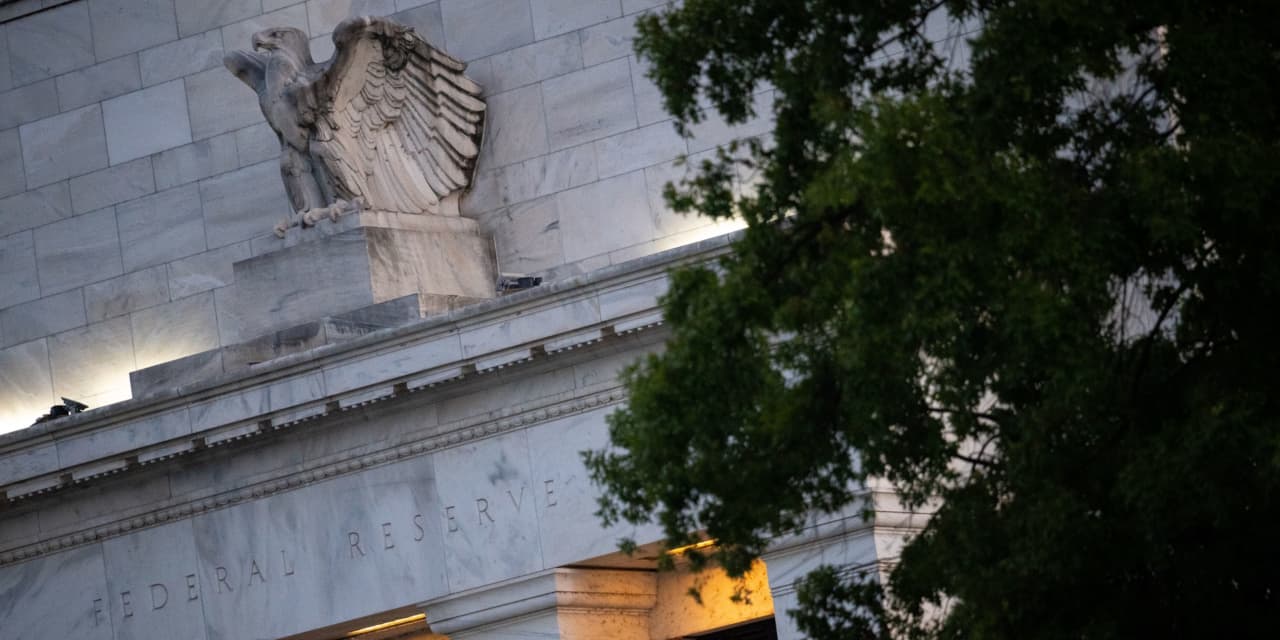
The losers are the Federal Reserve’s 12 regional banks, which have changed from posting big collective profits to posting big losses because of the rate increases. We dealt with this topic a few months ago, but you can bet that it’s going to get lots of attention when the total losses hit the strategic $100 billion level. That is likely to happen by the end of September.
It’s actually pretty funny, when you step back and look at it. Here’s the Fed, which is trying to tamp down inflation and slow down (but not crash) the economy, raising rates consistently for 18 months. As a result, all sorts of individual and institutional money-market fund investors have seen their income soar. But the Fed itself has been losing lots and lots of money.
Before the Fed started raising rates, the regional banks were very profitable. They sent $107.4 billion of profits to the Treasury in 2021. But for reasons I’ll explain in a bit, the Fed’s rate increases have vaporized the Fed banks’ profits, and their remittances to the Treasury this year have vanished almost entirely.
Now, let me show you the money fund math.
Peter Crane of Crane Data told me that as of February 2022, the average interest earned by money-market fund holders was 0.02%. The funds’ assets totaled $5.009 trillion, making their interest yield about $1 billion a year.
But as of July 31 of this year, Crane told me, the funds’ interest yield was 5.08%, and their assets were up to $5.903 trillion. By Crane’s math, the funds’ yields were running at the rate of $ 299.9 billion a year.
But wait, there’s more. As of Aug. 18, Crane said, the funds’ average yields were up to 5.15%. If we assume that assets stayed the same, which is a very conservative assumption, the funds would be yielding more than $300 billion a year to their owners.
Crane cautions, however, that the $300 billion-plus is an “annualized” rate—you take the current situation and extrapolate it for an entire year. It isn’t money that fund holders have actually collected.
Money fund holders’ income is rising because the funds buy short-term securities, and over the past 18 months, the Fed has raised its short-term federal-funds rate to 5.25%-5.50% from essentially zero. Money fund holders’ income has risen along with the Fed’s rate increases.
“Five percent is the magic number,” Crane says. “It holds psychological import, and money starts pouring into money funds at 5%. That’s what happened in the late ’90s and early 2000s, and that’s what’s happening now.”
But while money fund investors are making 30,000% more than they did before the Fed began raising rates in March of last year, the Fed itself—ironically—is running losses because of the rate increases.
The Fed’s 12 regional banks, which used to make a lot of money, are now running big collective deficits. That’s because they’re paying more than 5% on trillions of dollars that they’ve borrowed from money-market funds and other financial institutions, while their own portfolios remain loaded with low-yielding mortgage and Treasury securities that they bought during the days of near-zero interest.
The Fed banks, which for reasons we’ll discuss another day have no chance of going broke, have been borrowing at high cost to keep money fund and bank assets from swamping the financial system and forcing down interest rates. If that happened, it would undermine the Fed’s inflation-fighting strategy.
As of June 30, what the Fed calls a “deferred asset”—but what I call “losses”—totaled $74.7 billion, according to the Fed’s recent semiannual financial report.
Stephen Church of Piscataqua Research in Portsmouth, N.H., the person who first brought the Fed banks’ loss situation to my attention, says losses have been running at about $2 billion a week, totaled $77.1 billion for the year as of late August, and the trailing loss was $94.5 billion. He expects the losses to hit $100 billion in September, which I think would be a major, attention-grabbing number.
The Fed banks’ combined profit remittances to the Treasury through June 30 were a mere $102 million, down more than 98% from the $62.8 billion remitted through June 30 of last year, before the rate increases began to seriously affect the financial markets and the Fed banks’ profits.
Under the rules under which they operate, the Fed regional banks have to earn enough profits to dig themselves out of the “deferred asset” hole before they can start sending serious money to the Treasury again.
The Fed banks’ losses don’t increase federal budget deficits. But the now-vanished big profits that they used to send the Treasury did help hold down the deficit, which is $1.6 trillion so far this fiscal year. That could be an issue at a time when taxpayers are getting worried about rising government debt. And politicians might see these losses as a reason to add to their criticisms of the Fed, which are pretty loud already.
In other words, money fund investors’ gains are to some extent the Fed’s—and the Treasury’s and U.S. taxpayers’—losses.
I don’t know what the future holds for money fund investors—no one does. But for now, they are profiting substantially from the Fed’s rate increases. And are likely to stay big winners for at least the immediate future.
So if you have substantial money-market mutual fund accounts, it’s time to be happy. Enjoy it while you can.
Write to [email protected]
Read the full article here