




Key Takeaways
- David Barnett was once a tenured philosophy professor at the University of Colorado, Boulder.
- He kept running into a persistent problem, though — his headphone wire would get tangled.
- Barnett’s solution to the problem has evolved from two buttons glued to the back of his iPhone 3 to an accordion-mechanism circle that can stick to the back of an iPhone: a PopSocket.
David Barnett, 55, stumbled upon his phone accessory brand by accident. In 2010, he was a tenured philosophy professor at the University of Colorado, Boulder — more interested in questions of consciousness and the nature of reality than consumer products.
However, Barnett had entrepreneurial roots, calling himself “a little hustler” as a child. “I was often inventing products and making up businesses, always trying to make a buck,” he tells in a new interview.
It was a small daily annoyance — tangled headphone cords in his pocket — that tugged him back to his entrepreneurial instincts.
How PopSockets came to be
One day, frustrated by a knotted headphone cord, Barnett drove to a Joann Fabric store in Boulder and hacked together a solution just for himself. In his garage, he glued two clothing buttons, one-inch in diameter and spaced apart, on the back of his small iPhone 3. He then wrapped his headphone wire around the buttons to keep it from tangling.
“Voila, I had a solution for myself,” he recalls. “But my friends and family, they all thought it was absurd and made fun of me.”
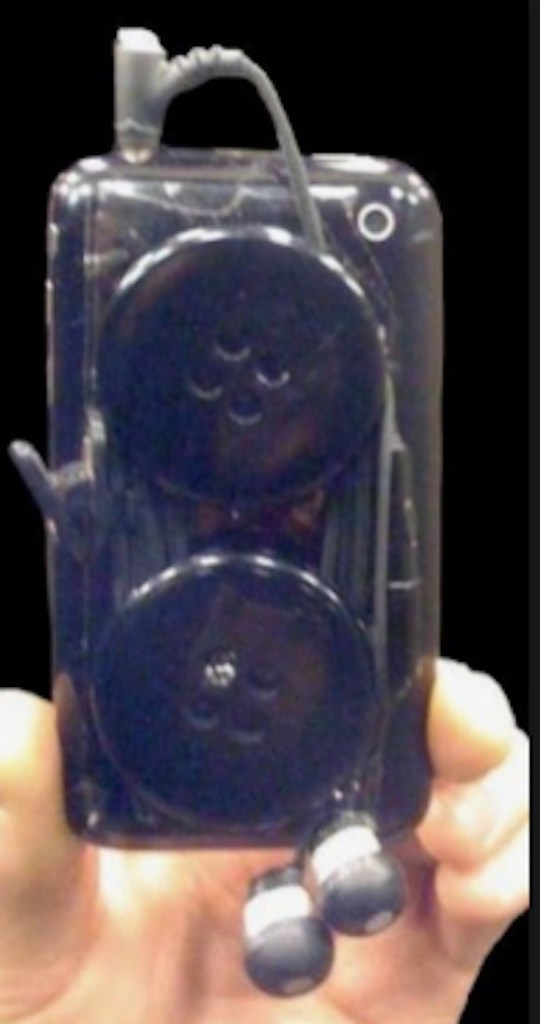
That skepticism pushed him to imagine a more refined version: buttons that could expand and collapse flush into a case while offering multiple functions as a stand, grip and clip. He got inspiration from collapsible colanders in his kitchen, usually made out of silicone.
“It turned out to be a lot harder than I imagined, miniaturizing that mechanism,” he discloses. “It’s not easy to miniaturize at all, given the physics of it.”
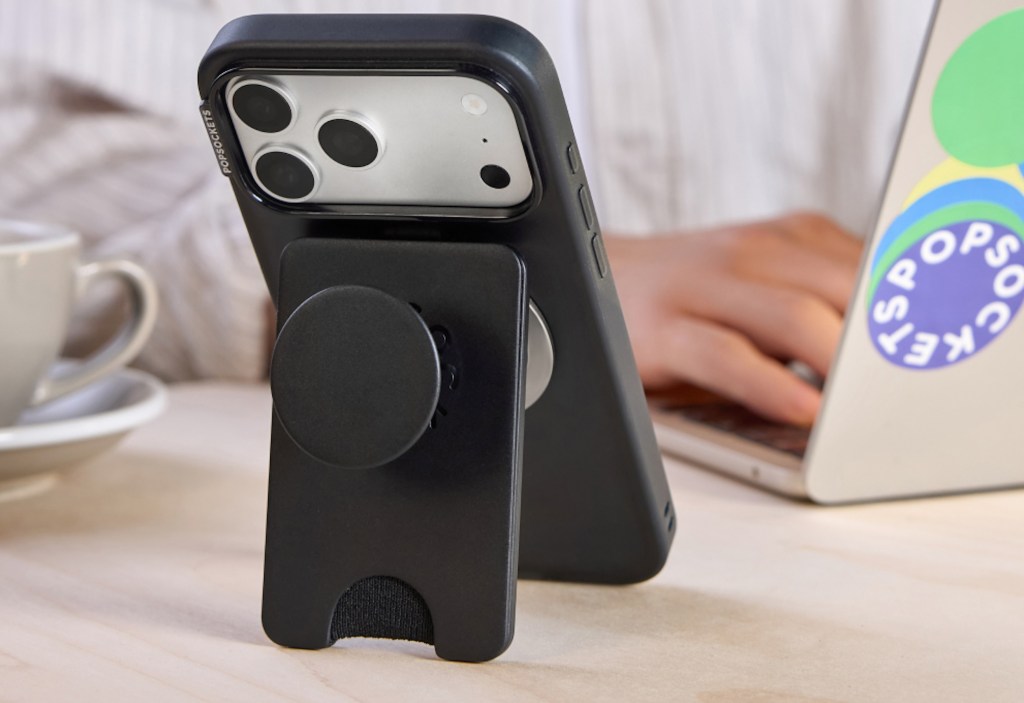
So Barnett taught himself 3D computer-aided design software and started sending off models to a prototyper in China. Within three or four weeks, he would receive the prototypes. “I would be devastated each time,” Barnett says of those early models. It ultimately took “probably 60, 70 rounds, hundreds and hundreds of prototypes” before Barnett had an accordion-mechanism circle that could stick to the back of a phone — a PopSocket.
Realizing the product could sell
As Barnett was sending out prototypes, his ambitions quietly shifted from solving his own problem to seeing if he could get a product on a peg in a store.
The turning point came in the quad at the University of Colorado, Boulder. Barnett, still teaching philosophy, was walking across campus with “crazy-looking, accordion-based buttons” stuck to the back of his phone when a group of middle school students stopped him. The kids asked him what the buttons were, and he showed them how the buttons expanded and collapsed.
“I watched their jaws drop, and their eyes got big,” he says. “I knew that look. With that look, I could probably sell a few of these.” Even as friends and family told him that PopSockets were “the stupidest thing they had ever seen,” the kids’ reaction kept him going.
Barnett initially wanted to sell a few thousand PopSockets and pay for his expenses. However, as the product became more popular and he saw people’s reactions, his ambition started to change. He has now sold over 290 million PopSockets.
Launching a Kickstarter campaign
Barnett incorporated PopSockets in 2011, launched a Kickstarter campaign in 2012 and sold his first products in 2014. The crowdfunding effort reflected his unconventional approach — he danced in a video for his campaign. “The point of my campaign was to have fun and not be a traditional, just purely utility-based sort of product,” he says. “I wanted to have fun with it.”
The fun, irreverent video worked — within days, Barnett was hearing from people in Japan and Europe who had seen the video and the campaign. “It worked for getting the word out,” he says.
Barnett ultimately raised $15,000 to $17,000 with the campaign, which he notes was gone in a matter of weeks. He relied on his savings to pull PopSockets together, several hundred thousand dollars of his own money.
Deciding to walk away and making a critical change
At the time of the Kickstarter campaign, Barnett was a tenured professor at the University of Colorado, Boulder, making around $70,000 a year. Walking away was a slow, painful decision.
“Tenured professors, they don’t give up their jobs easily,” he says. “It’s an amazing job, and it’s not something to just give up.”
Friends with business and law backgrounds warned Barnett that he needed a source of income, and he shouldn’t give up his day job. Still, around 2014, as sales began to pick up, Barnett transitioned fully into running PopSockets.
The product almost didn’t take off — until Barnett made one crucial change. His original retail strategy was to sell PopSockets in pairs for $10, so customers could use two units to wrap their headphones. He watched shoppers at a Boulder toy and kite store pick up the packs, stare blankly, then put them back. “Nobody was buying them,” he admits. “They didn’t understand it.”
Then came his “aha’ moment: sell a single PopSocket instead, keep the price at $10 and show a hand diagram on the packaging to highlight the grip function. “I offered people half the product for the same price and just remarketed it, and it just blew up,” he says. “We sold 10, 20 times as many each week with the new presentation.”
The three vectors of virality
PopSockets became profitable by the end of its first year, with “explosive growth” month over month. The company was eventually named the second-fastest-growing company in the U.S. by Inc. in 2018.
That growth was fueled by PopSockets going viral. There were three main vectors, or dimensions, of that virality, Barnett explains. First, celebrities in Los Angeles, including the Kardashians and Gigi Hadid, began using PopSockets, driving a visible sales hotspot around Hollywood.
Second, PopSockets would sell products to middle schools at wholesale prices, and the schools would sell them to the students. “The students loved them, and they would take them home and infect the rest of the family with the virus,” Barnett jokes. “So their brothers and sisters would see them and their parents would start using them.”
Third, the promotional‑products industry embraced PopSockets as a low‑cost, logo‑bearing item that would be out in public for hours on the back of people’s phones. “They want to put their logos on our products and give them away as gifts or somehow get them into people’s hands,” Barnett says. He distributed tens of thousands of units through that channel alone, all before the company spent meaningfully on traditional marketing.
As the product went viral, major retailers followed. Barnett went to the Consumer Electronics Show in 2014 and 2015, grabbing anyone who walked by and demonstrating the grip until the hall closed each night. That effort landed early deals with T-Mobile and Sam’s Club.
After PopSockets caught fire, “the retailers came to us,” Barnett says. Walmart, Best Buy, Target and Apple all added the product to their stores, helping the brand reach about 70,000 retail doors before the pandemic.
Advice for founders
For founders, Barnett’s most concrete advice is simple: “Start small and don’t quit your day job unless you’re independently wealthy.” He nearly went bankrupt multiple times and stresses the importance of using nights and weekends to validate a product before scaling.
“Sure, it’s okay to dream big, but don’t start big,” he says. “Just try to sell one product, one service, whatever it is. Perfect your product before you start scaling it out.”
Key Takeaways
- David Barnett was once a tenured philosophy professor at the University of Colorado, Boulder.
- He kept running into a persistent problem, though — his headphone wire would get tangled.
- Barnett’s solution to the problem has evolved from two buttons glued to the back of his iPhone 3 to an accordion-mechanism circle that can stick to the back of an iPhone: a PopSocket.
David Barnett, 55, stumbled upon his phone accessory brand by accident. In 2010, he was a tenured philosophy professor at the University of Colorado, Boulder — more interested in questions of consciousness and the nature of reality than consumer products.
However, Barnett had entrepreneurial roots, calling himself “a little hustler” as a child. “I was often inventing products and making up businesses, always trying to make a buck,” he tells in a new interview.
Read the full article here