



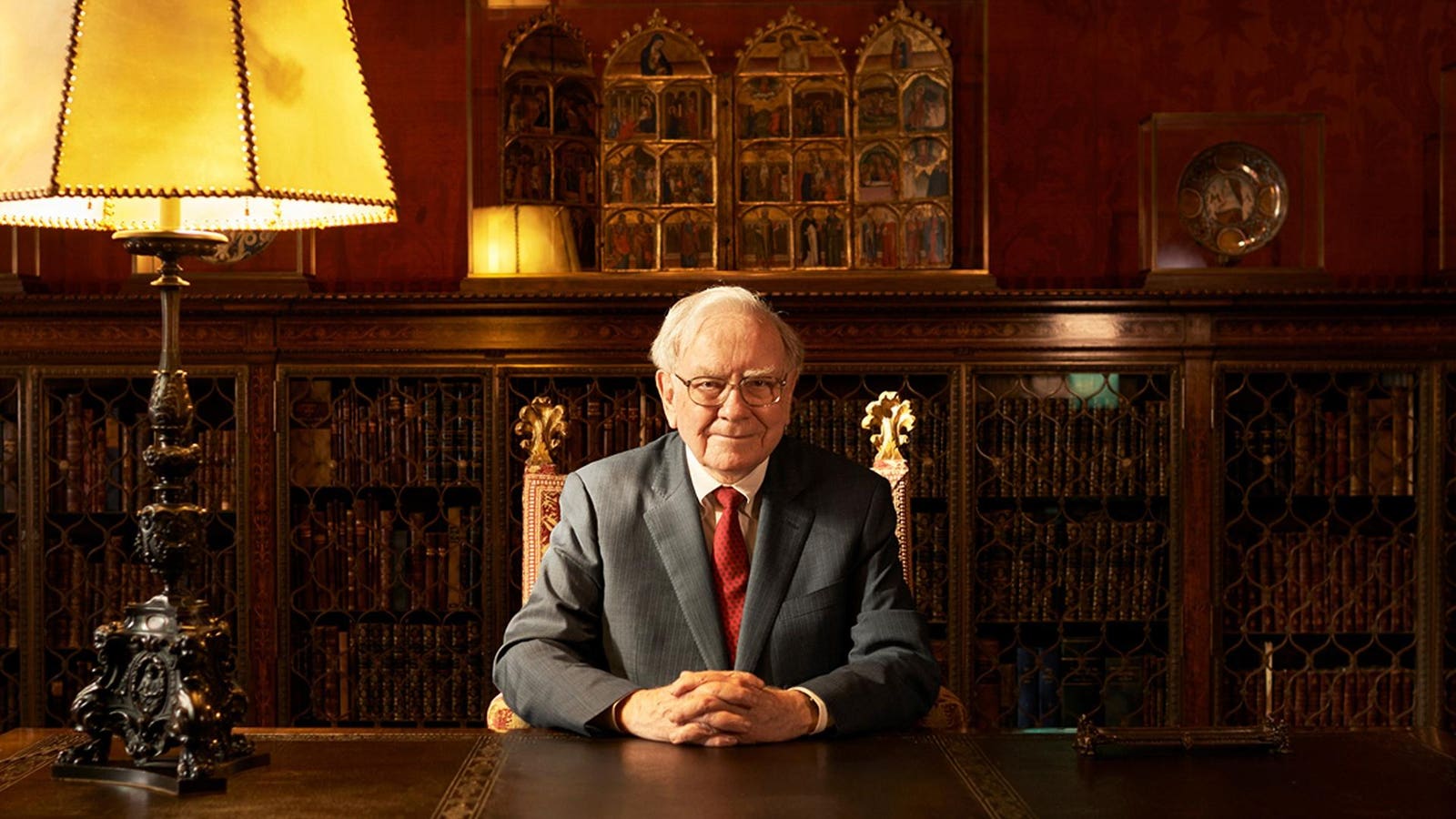
Ben Graham influenced a host of billionaire investing titans, from the Oracle of Omaha to Seth Klarman, David Tepper and Mario Gabelli. Here are defensive stocks he would love.
By John Dobosz, Forbes Staff
Before he became a mega-billionaire solely through his investment skill, and after he earned his bachelor’s degree from the University of Nebraska in 1949, Warren Buffett took his talents to the Morningside Heights neighborhood on the upper west side of Manhattan to earn his master’s degree in business from Columbia University, studying under the tutelage of Professor Benjamin Graham, widely known as the “father of value investing.”
More than 15 years prior to Buffett’s arrival on the Columbia campus, Graham co-authored Security Analysis with fellow Columbia professor David Dodd—a book widely considered the seminal investing treatise published after the enactment of the Securities Exchange Act of 1934.
Before the establishment of the Securities and Exchange Commission, flim-flam artists and stock scammers ruled the roost on Wall Street and were given few disincentives to making up numbers regarding the operating results of companies they were promoting. Once the reporting of financial information was standardized and required by federal law, it provided a basis for evaluating companies based on things like earning power, efficiency with assets and stockholder equity, and other real-world measures of financial performance.
Before his death in 1976, Graham went on to publish several more books on how to spot attractive investments, perhaps none more consequential than The Intelligent Investor, in 1949. In this still-influential investment tome, Graham addressed the idea that there were two types of investors: aggressive or enterprising and defensive. Defensive investors are the most risk averse.
For defensive investors, Graham advised not to consider buying stocks trading above 15 times earnings per share, or more than 1.5 times book value per share. Book value, also called shareholder’s equity, is the difference between assets and liabilities. Combining these two provisos into an equation and solving for the geometric mean yields the so-called “Graham number”: a price above which a defensive investor should not pay for a stock. Graham believed that it was better to be conservative and to select only stocks priced by a margin of safety below their intrinsic value.
“There is nothing wrong per se with having a valuation governor on one’s stock analysis, but the Graham number is far too simplistic to be employed en masse, especially in the current climate where Book Value can be a moving target,” says John Buckingham, long-time value investor and editor of The Prudent Speculator newsletter. “Think of the hold-till-maturity assets on bank balance sheets or all the goodwill companies have accumulated from acquisitions that could be written down or written up.”
Buckingham makes a good point regarding the book value of financial firms, so in the stocks presented below with a stock price below the Graham number, we exclude any company from the financial sector. It may remove from consideration some attractively priced banks, but it will also limit the possibility of incorporating bad data into our valuations.
“When screening for value in the Russell 2000 index, I like to first filter out stocks with the Graham formula, and this alone has generated an additional 5% annual return over the benchmark while greatly enhancing the Sharpe Ratio, “says Kurtis Hemmerling, equity factor model designer at Portfolio123, a company that advises hedge funds, ETFs, and family offices on fundamental data used in building models. “When I overlay the Graham number with a Graham-esque multifactor ranking system, the top 15 stocks add an additional 7% annual return yet again, so I find these to be fantastic principles to build a solid fundamental strategy.”
The 12 stocks shown below trade at prices below their “Graham number” and they all pay dividends that are covered comfortably by free cash flow over the past 12 months. For defensive investors willing to tap into deep value, a reliable dividend is usually part of the tradeoff for potentially explosive growth, so yield is also a requirement. We also excluded companies with a debt-to-equity ratio of more than 60%, those with negative earnings or book value, and required companies to trade below their five-year median enterprise value-to-Ebitda ratio, a number that considers the impact of debt and equity when evaluating operating earnings efficiency.
Worrywart Stocks
Warren Buffett’s mentor counseled defensive investors never to pay more than 15 times earnings or 1.5 times book value for a stock. These 12 names, ranked by debt-to equity ratio (low to high), all make the grade.
Based on these criteria, the biggest bargain appears to be Jackson, Miss.-based Cal-Maine Foods (CALM), which produces, grades, packs, markets, and distributes fresh shell eggs to national and regional grocery store chains, club stores, foodservice distributors, and egg product manufacturers in the United States. It owns operating farms, processing plants, hatcheries, feed mills, warehouses and other properties. Over the past 12 months, Cal-Maine generated revenue of $3.15 billion and earnings of $15.52 per share. Cal-Maine was minting money in 2022 when the average price of grade A eggs topped out at $4.82 per dozen in January. Last month, one dozen eggs was averaging $2.06 a dozen—still more than 15% above the 2016-2022 average.
As lending rates fell for the first time in seven weeks to 7.76% for a 30-year mortgage, two nationally prominent home builders also made the cut: Atlanta-based PulteGroup (PHM) and Horsham, Pa.-based Toll Brothers (TOL).
MORE FROM FORBES
Read the full article here