



Key Takeaways
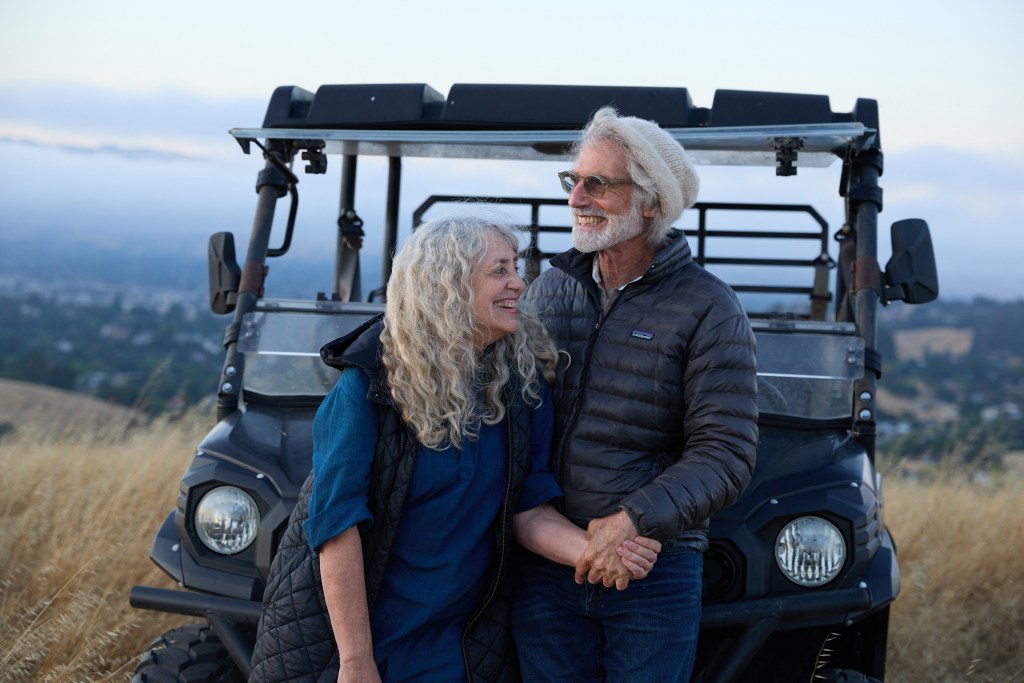
- Andy and Rachel Berliner are the husband-wife team behind Amy’s Kitchen, a frozen meal company.
- Amy’s Kitchen began as a personal solution 38 years ago when Rachel was on bed rest during pregnancy and Andy couldn’t find any tasty, organic frozen meals at natural food stores.
- Over nearly four decades, Amy’s has expanded to $1 billion in annual retail sales, with products in 57,000 U.S. grocery stores.
Amy’s Kitchen frozen meals began 38 years ago, when Rachel Berliner was pregnant with her daughter Amy, who the brand is named after. In the last few months of her pregnancy, the doctor said Rachel should stay in bed and stop doing housework or cooking. So Rachel tasked her husband, Andy, with making dinner.
“I went to a natural food store because we always ate organic, and I didn’t know how to cook,” Andy tells Entrepreneur in a new interview. “I bought a few things, and they were horrible. So that was a big part of our inspiration to start.”
Walk into the frozen aisle of any Whole Foods, Target or Walmart, and you’re sure to spot Amy’s frozen meals on the shelf. However, most shoppers are unaware that Amy’s only serves vegetarian meals — there’s nothing on the packaging to give away the secret.
“We’re a vegetarian company, so we have to make products that anybody would like, whether they are vegetarian or not,” Rachel says. “We never put vegetarian on the box because we don’t want to send people away who are not vegetarians.”
The promise of serving organic, vegetarian meals is important to the Berliners. The husband-wife duo modeled Amy’s after their own lifestyle, the way they ate. Over the years, their company has grown, despite the fact that they haven’t advertised.
“We actually sell more entrees than the biggest brands,” Andy says. “Amy’s is the number one entree brand now in two of the largest retailers in the country. We’re in 57,000 grocery stores now.”
The Berliners brought on Rachel’s mother to develop their first recipe: a vegetable pot pie. It was the most popular frozen meal at the time. Rachel’s mother worked on the sauce and the pie’s components.
Rachel notes they faced a “battle” to change the perception of frozen food, because most people thought that frozen food tasted like cardboard and wasn’t healthy. They came up with new recipes to appeal to a wider audience and kept close to their mission of delivering healthy, vegetarian food.
How Amy’s works
After the vegetable pot pie, the Berliners, with the help of Rachel’s mother, developed a broccoli pot pie and then a mac and cheese. They have since expanded to canned organic soups and beans. Their goal was to put their own spin on food that was already popular that people liked to eat. They used clean ingredients and made their products taste “really good,” Rachel says.
They also differentiated themselves by cooking food the way they did at home, even when they moved to manufacturing centers. In an industry driven by efficiency, shortcuts and additives, they insisted on processes that looked more like a restaurant kitchen than a factory line.
“We didn’t realize at the time that other people weren’t cooking food,” Andy says. “They were manufacturing food. We make food, cooked the way you do at home, but in big kettles. We marinate things, we make broth for all of our soups.”
Amy’s runs like a “big restaurant,” not like a food manufacturing center, according to Andy. That commitment makes Amy’s products more expensive to produce than most frozen meals, but the Berliners have never been interested in cutting corners to boost margins. Instead of pouring money into advertising, they put it back into the meals themselves and relied on customers to carry the brand forward.
“We don’t advertise because all of our money goes into the meal that we’re making,” Rachel says. “So we’ve always grown by word of mouth.”
Building a billion-dollar business
That word-of-mouth engine has proved powerful enough to create a billion-dollar business. In 2025, shoppers spent about $1 billion on Amy’s Kitchen products at cash registers across the U.S., translating to roughly $600 million in gross sales, Andy discloses. Today, Amy’s entrees often outsell legacy names like Stouffer’s and Lean Cuisine, despite being 25% more expensive than these conventional competitors.
Andy estimates that about 95% of Amy’s customers are not vegetarians, but “flexitarians” who simply want food that tastes good. Amy’s serves roughly 500,000 meals a day.
The brand is intensely personal. Rachel shapes the packaging with fabrics sourced in India and Mexico, flowers from her own garden and plates from her kitchen, all to signal that there is a real home behind the brand.
The way they find new recipes is also unique. “We get homemade recipes from friends, and they come and teach us how to make it,” Rachel says. The goal is to get the product to taste as homemade as a boxed meal can get.
Choosing not to sell
Nearly four decades after founding Amy’s, the Berliners remain at the center of the company. Andy, Amy’s CEO, had already built and sold a herbal tea company in the 1970s, before starting Amy’s. He watched the acquirer dismantle what he had created, an experience that still shapes him many years later.
“One of the reasons we haven’t sold the business all these years is because I saw the business that I had built and we sold it. I saw it destroyed by the people we sold it to,” he says. “So that’s always given me a built-in resistance to doing that again.”
Rather than chasing a fast exit, the Berliners have grown Amy’s slowly, funding expansion through profits, cautious debt and long‑term relationships. The company has averaged roughly 20% annual growth and expanded from a 3,000‑square‑foot facility to multiple plants.
For aspiring entrepreneurs, Rachel advises starting with a real, unmet need. To start a new food line, she would look around and say, “Hey, this doesn’t exist. Or if it does exist, it’s not very good.” And Andy says entrepreneurs should build to last rather than to sell the business in a few years.
“I think true entrepreneurship is doing something you love and building it to last,” he says.
Key Takeaways
- Andy and Rachel Berliner are the husband-wife team behind Amy’s Kitchen, a frozen meal company.
- Amy’s Kitchen began as a personal solution 38 years ago when Rachel was on bed rest during pregnancy and Andy couldn’t find any tasty, organic frozen meals at natural food stores.
- Over nearly four decades, Amy’s has expanded to $1 billion in annual retail sales, with products in 57,000 U.S. grocery stores.
Amy’s Kitchen frozen meals began 38 years ago, when Rachel Berliner was pregnant with her daughter Amy, who the brand is named after. In the last few months of her pregnancy, the doctor said Rachel should stay in bed and stop doing housework or cooking. So Rachel tasked her husband, Andy, with making dinner.
“I went to a natural food store because we always ate organic, and I didn’t know how to cook,” Andy tells Entrepreneur in a new interview. “I bought a few things, and they were horrible. So that was a big part of our inspiration to start.”
Walk into the frozen aisle of any Whole Foods, Target or Walmart, and you’re sure to spot Amy’s frozen meals on the shelf. However, most shoppers are unaware that Amy’s only serves vegetarian meals — there’s nothing on the packaging to give away the secret.
Read the full article here