


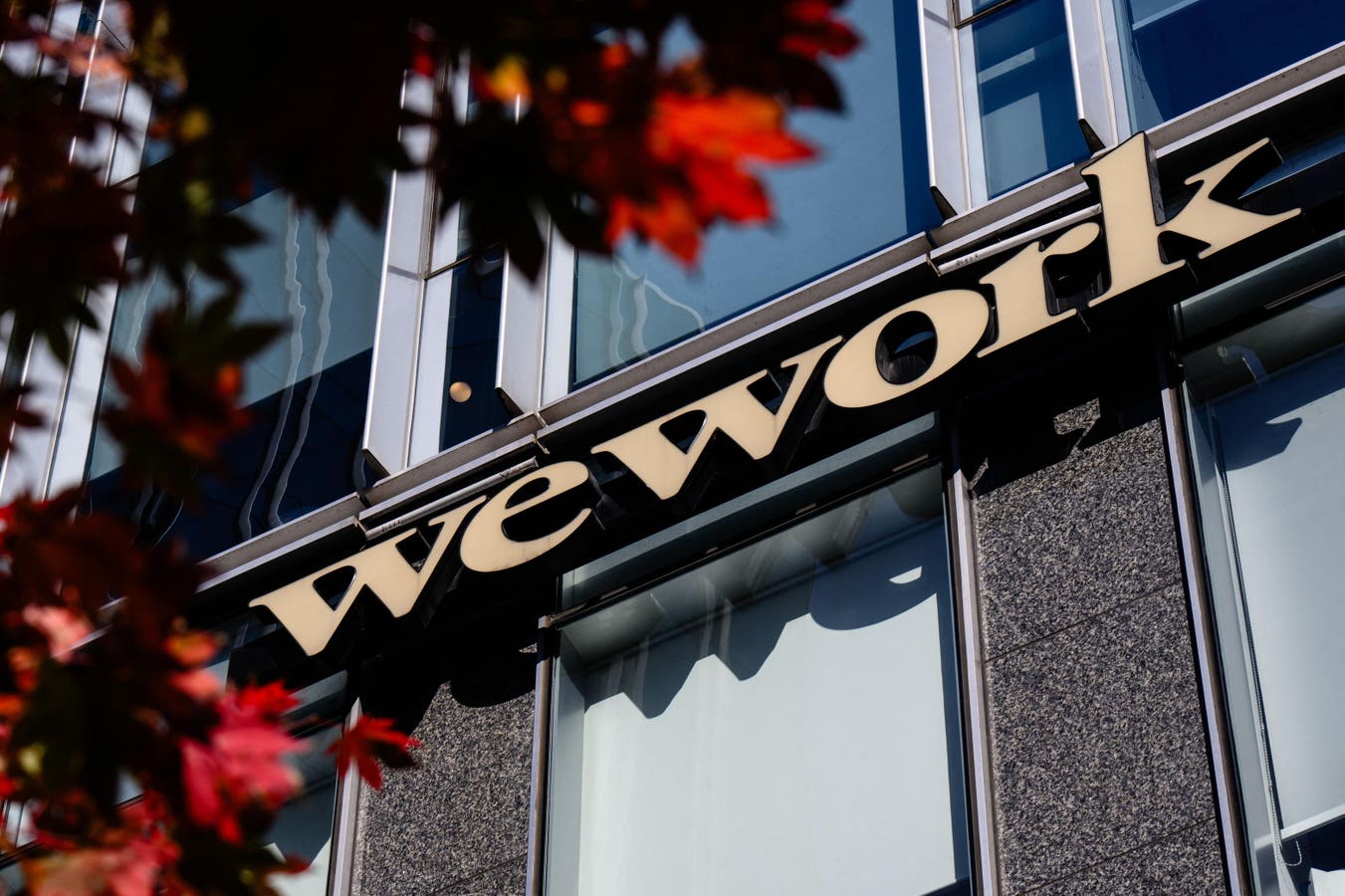
WeWork’s collapse shows how working from home is changing commercial real estate and compounding the sector’s economic challenges. Once hailed as the future of office development, the company recently filed for bankruptcy.
WeWork was born and grew after the Great Recession, opening its first Manhattan location in 2011. The company rented out offices for work-sharing. It not only offered well-equipped rooms with printers, internet, kitchen, and pleasant environments, but also promoted a startup culture that could stimulate entrepreneurs and innovation.
The company grew rapidly. By 2014, Forbes reported WeWork was “the fastest-growing lessee of new office space in New York,” and also was showing rapid growth in many other cities.
WeWork’s expansion was driven by the Japanese conglomerate SoftBank, which ultimately invested close to $12 billion. And its vision of transforming commercial real estate attracted other major players. Boston Properties
BXP
In January 2019, WeWork claimed a staggering valuation of $47 billion as it prepared for an IPO, per SoftBank. But the IPO was withdrawn due to concerns about the business model and also founder Adam Neumann’s lavish lifestyle and eccentric behavior. Those included a picture on Reddit of Neumann walking barefoot on Manhattan streets and a Wall Street Journal report of him hiding marijuana in cereal boxes to smoke on private airplane flights.
Of course, markets and investors can tolerate lots of eccentric CEO behavior as long as they are making money. Just review the personal behaviors of Steve Jobs, Elon Musk, or Donald Trump.
In spite of continuing losses and bad publicity, WeWork returned to the capital markets in 2021. An initially successful Special Purpose Acquisition Company offering drove up share prices by more than 13% in the first day of trading.
But the enthusiasm and hype disguised underlying financial problems. Even with all of its business and revenue growth, WeWork never turned a profit. And as the company’s troubles multiplied, its value fell, with shares losing more than 98% of their value in a few years, culminating in the recent bankruptcy filing.
So, is WeWork just another story of financial mismanagement? After all, companies go belly up all of the time. Forbes staff writer Derek Saul has listed 15 major bankruptcies since 2022, ranging from brick and mortar retailer Bed Bath & Beyond to trucking and logistics company Yellow Corporation to Silicon Valley Bank.
The WeWork story certainly includes a lot of bad management and poor decisions. But the company’s failure also dramatizes the troubles facing commercial real estate—expensive leases for office space that now don’t generate enough rental revenues for building owners to pay off their financing.
That underlying problem is driven in turn by changes in office occupancy and rentals resulting from the post-pandemic rise in working from home. Economists Arpit Gupta, Vrinda Mital, and Stijn Van Nieuwerburgh’s analyses have described this (perhaps somewhat hyperbolically) as a commercial “doom loop,” and an “office real estate apocalypse.”
The economists’ grim scenario sees increased working from home systemically harming CRE markets, where overly high building valuations and loans can’t be supported by falling rental income. CRE loans often are short duration financing with “balloon” payments, a lump-sum payoff of the entire loan at its end. Those loans often are in periods as short as five years, and many of them are coming due.
As properties come up for refinancing, investors and owners face lower rental income, higher interest rates driven by the Federal Reserve’s anti-inflation policies, and increasing caution about CRE risk from banks, institutional investors, and other lenders. Reuters recently reported that banks are setting aside higher reserves for non-performing CRE loans, signaling lender worries about the sector.
WeWork’s bankruptcy will put further downward pressure on the CRE market. In cities like New York, San Francisco, and others, WeWork was a major tenant. As of June 2023, WeWork was renting around 20 million square feet of office space, the largest private rental portfolio of any U.S. company. Commercial Observer, a professional CRE news publication, explained how the bankruptcy will mean renegotiation or outright cancellation of their leases, reducing income and increasing competition in the office lease market.
WeWork was overhyped as an investment. Like other troubled office providers, WeWork has leases that are too expensive for its revenues. Some of that problem is due to their bad management. But a good part of it comes from the dramatic changes we continue seeing in the commercial office market, driven by increased working from home.
Read the full article here