


• Home
  • News
  • Personal Finance
    • Savings
    • Banking
    • Mortgage
    • Retirement
    • Taxes
    • Wealth
  • Make Money
  • Budgeting
  • Burrow
  • Investing
  • Credit Cards
  • Loans

Subscribe to Updates

Get the latest finance news and updates directly to your inbox.

Top News

Young Americans Are Miserable: 6 Reasons Their Happiness Is Falling Off a Cliff

April 20, 2026

Analysis Exposes a Relentless Layoff Trend Across American Tech Companies

April 20, 2026

Keeping Bad Clients Is Costing You More Than You Think

April 20, 2026
Facebook Twitter Instagram
Trending
  • Young Americans Are Miserable: 6 Reasons Their Happiness Is Falling Off a Cliff
  • Analysis Exposes a Relentless Layoff Trend Across American Tech Companies
  • Keeping Bad Clients Is Costing You More Than You Think
  • Here’s What’s Blocking You From Getting the Best Housing Deals
  • Successful Entrepreneurs Never Stop Learning and This Documentary Subscription Helps
  • Iran War Is Driving Up Fertilizer Costs. What Will US Farmers Do?
  • Over Half of Americans Now Need a Side Hustle Just to Survive in 2026
  • Forget Guessing — Here’s How I Trade Stocks That Are Already Moving
Tuesday, April 21
Facebook Twitter Instagram
Indenta
Subscribe For Alerts
  • Home
  • News
  • Personal Finance
    • Savings
    • Banking
    • Mortgage
    • Retirement
    • Taxes
    • Wealth
  • Make Money
  • Budgeting
  • Burrow
  • Investing
  • Credit Cards
  • Loans
Indenta
Home » A Government Shutdown After Labor Strikes Only Makes the Fed’s Job Harder
Investing

A Government Shutdown After Labor Strikes Only Makes the Fed’s Job Harder

News RoomBy News RoomSeptember 24, 20237 Views0
Facebook Twitter Pinterest LinkedIn WhatsApp Reddit Email Tumblr Telegram

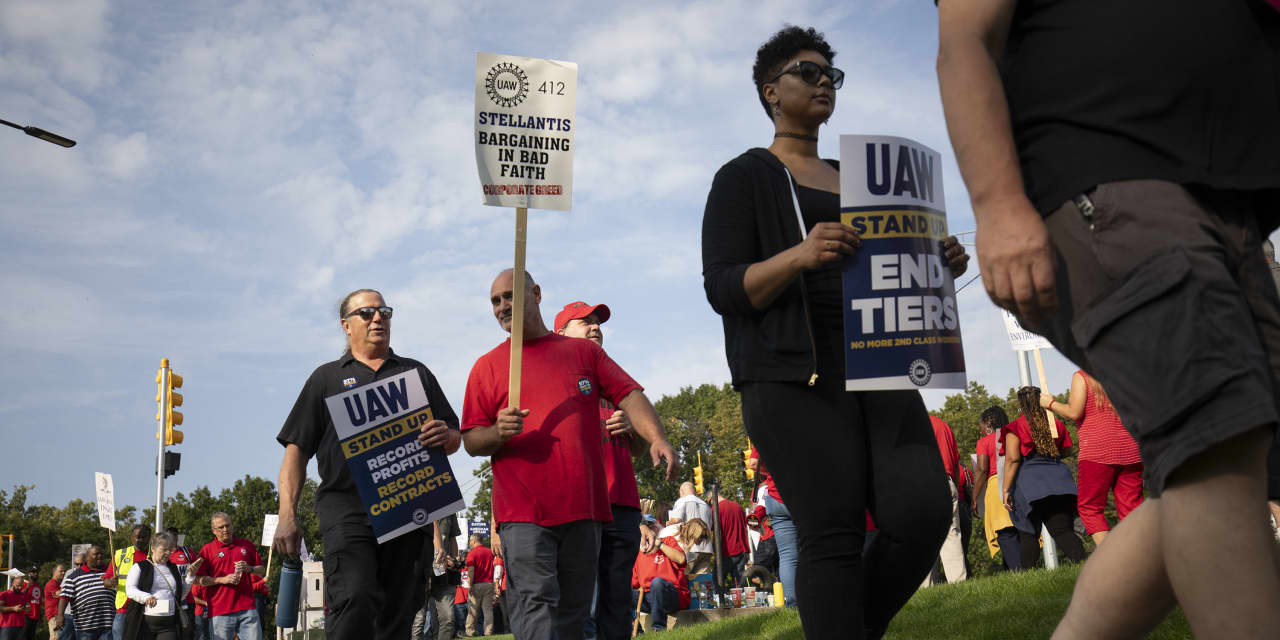
The United Auto Workers expanded its strike on Friday.


Bill Pugliano/Getty Images

Saturday marked the autumnal equinox, and fall is in the air: The weather is cooling, pumpkin spice is everywhere, and—as has happened every so often in recent years—the U.S. is nearing yet another government shutdown.

Congress isn’t expected to reach a compromise and pass a plan to keep the government open before Oct. 1, the start of the federal government’s new fiscal year.

A number of factors seem to be eroding confidence in lawmakers’ ability to reach a deal before next weekend. Among them, Republicans in the House of Representatives haven’t reached a consensus on a continuing resolution for spending amongst themselves, let alone one that would appease both sides of the Senate.

While government shutdowns reflect how partisanship and grandstanding have hamstrung American politics, they tend not to be too disruptive to markets. After all, they have become relatively commonplace, don’t last very long, only apply to nonessential services, and the government pays furloughed employees in full once normal operations resume.

While shutdown is “an ominous term, like the dozens of government shutdowns before it, it won’t have a material impact on the economy,” writes Sevens Report Founder and President Tom Essaye.

That doesn’t mean that it will be a complete nonevent, however. Historical data around the previous 19 government shutdowns show the
S&P 500
tends to decline in the week before a shutdown—a pattern that has become more pronounced since 1995, note analysts at Société Générale.

The anticipation of a shutdown seems to be worse than the event itself: During shutdowns since 1995, the
S&P 500
has actually rallied by an average of 2.3%.

The firm’s economist Stephen Gallagher predicts that this year’s shutdown will likely be a relatively short one, further blunting the effect on markets.

But this year is a bit different, because isn’t just the threat of a government shutdown grabbing headlines. There have also been three major labor strikes happening in the U.S., from entertainment-centric Writers Guild of America and performers’ SAG-AFTRA unions, and the United Auto Workers.

Much like the government shutdown, the economic fallout from the strikes likely will be limited. The strikes ultimately affect a small number of workers relative to the overall economy, though fewer automobiles manufactured would cloud near-term economic data.

And therein, argues Essaye, lies the rub: Strikes may not be big enough to derail the economy, but they obscure trends and information when the Federal Reserve needs the clearest picture possible of the economy.

“Both the shutdown and strikes stand to make the data 1) Less available, 2) Less reliable and 3) Less accurate,” he writes. “A government shutdown could result in economic data not being produced (including the jobs report) and the strikes will skew the near-term economic data.”

“Think of it this way: If the Fed is trying to engineer a soft landing for the U.S. economic airplane,” he adds, “a shutdown will cause partial instrument failure and the strikes make it foggy!”

Landing a plane in fog isn’t an impossible feat, of course, but few bulls would want the Fed’s balancing act to get even trickier at the moment. While a lack of data could make the central bank a bit more dovish in the near term, it likely won’t change its overall outlook of higher interest rates for longer.

To mix a metaphor, the shutdown and strikes could all end up being a tempest in a teapot. But it could still leave a bitter taste in some investors’ mouths.

Write to Teresa Rivas at [email protected]

Read the full article here

Share. Facebook Twitter Pinterest LinkedIn Tumblr Email

Related Articles

Keeping Bad Clients Is Costing You More Than You Think

Investing April 20, 2026

Get Lifetime Access to 1,000+ Professional Courses for Just $19.97

Investing April 19, 2026

28-Year-Old Started $500k Side Hustle From Harvard Dorm Room

Investing April 18, 2026

The Real Advantage Small Businesses Have Over Big Brands

Investing April 17, 2026

The Right Way to Build an Online Community Around Your Brand

Investing April 16, 2026

How to Close the Execution Gap That’s Slowing Your Team Down

Investing April 15, 2026
Add A Comment

Leave A Reply Cancel Reply

Demo
Top News

Analysis Exposes a Relentless Layoff Trend Across American Tech Companies

April 20, 20262 Views

Keeping Bad Clients Is Costing You More Than You Think

April 20, 20262 Views

Here’s What’s Blocking You From Getting the Best Housing Deals

April 20, 20261 Views

Successful Entrepreneurs Never Stop Learning and This Documentary Subscription Helps

April 20, 20262 Views
Don't Miss

Iran War Is Driving Up Fertilizer Costs. What Will US Farmers Do?

By News RoomApril 19, 2026

USA TODAY Network / ReutersAmericans who were worried about grocery prices may soon feel the…

Over Half of Americans Now Need a Side Hustle Just to Survive in 2026

April 19, 2026

Forget Guessing — Here’s How I Trade Stocks That Are Already Moving

April 19, 2026

Get Lifetime Access to 1,000+ Professional Courses for Just $19.97

April 19, 2026
About Us

Your number 1 source for the latest finance, making money, saving money and budgeting. follow us now to get the news that matters to you.

We're accepting new partnerships right now.

Email Us: [email protected]

Our Picks

Young Americans Are Miserable: 6 Reasons Their Happiness Is Falling Off a Cliff

April 20, 2026

Analysis Exposes a Relentless Layoff Trend Across American Tech Companies

April 20, 2026

Keeping Bad Clients Is Costing You More Than You Think

April 20, 2026
Most Popular

Average monthly mortgage payment hits new high, topping $2K for first time ever

April 16, 20264 Views

Some College Students Are Switching Majors Because of AI

April 4, 20264 Views

Freaking Out About the Stock Market? Read This.

March 12, 20264 Views
Facebook Twitter Instagram Pinterest Dribbble
  • Privacy Policy
  • Terms of use
  • Press Release
  • Advertise
  • Contact
© 2026 Inodebta. All Rights Reserved.

Type above and press Enter to search. Press Esc to cancel.